Skip to the good stuff:
First things first — is this game worth the headache?
Look, I'm not going to sugarcoat it. Back 4 Blood launched in a rough state. The card system confused half the playerbase, the difficulty curve was a vertical wall painted to look like a gentle slope, and the bots would rather eat a Tallboy charge than heal you. I quit twice in my first week. Twice.
But here's the thing nobody tells you: once the card system clicks, once you stop treating it like Left 4 Dead 3 and start treating it like a deckbuilder where the zombies are just the clock ticking, this game becomes something special. I've got 400 hours in. I've beaten No Hope on every act. I've watched friends get demolished on Recruit because they didn't understand why their shotgun tickled the Ogre.
This guide is the conversation I wish I had after my third failed run on Blue Dog Hollow. I'm not here to sell you on the game. I'm here to stop you from throwing your keyboard through the monitor.
If you're coming from Left 4 Dead 2, forget everything you know. The muscle memory for kiting Specials is the same, but the strategy is completely different. You're not surviving on aim alone anymore.
Why you're dying (and it's not your aim)
Let me guess. You loaded in, grabbed an M4, ran forward, and got absolutely wrecked by a wall of Ridden that spawned behind you. You asked "where did they come from?" and your teammate just said "dude, the card." This is the single biggest frustration new players face, and the game does a terrible job explaining it.
The pain points are real, and they're all tied to the same root cause: you are treating corruption cards like random background noise instead of the actual mission modifiers they are.
Here's what actually kills you:
- Silent hordes — the game will spawn a horde without the usual alarm sound if a corruption card is active. You will hear nothing, then die to a Bruiser you never saw coming. This is not a bug. This is the game lying to you.
- Ammo economy — that sniper rifle feels great until you realize you're sharing ammo with two other players and the safe room has 10 pistol bullets. The game does not tell you that ammo types are shared by color. White is not free.
- Team damage — on Recruit it tickles. On Veteran it hurts. On Nightmare it will end friendships. I've watched a single grenade wipe a whole team because someone threw it at a Tallboy while a teammate was behind it. The game does not penalize you visually until it's too late.
- Not reading corruption cards — you see "Boss Spawn" and think "cool, I'll kill it." You don't see that the Ogre has 40% more health because of a stack modifier you ignored. Then you run out of ammo, get cornered, and blame the game.
The biggest sin? The tutorial teaches you how to shoot and ping. It doesn't teach you that your deck build matters more than your aim. I spent my first three runs stacking copper cards and got destroyed by the second boss EVERY TIME. Copper doesn't kill Ogres, folks.
The first 10 hours — what I wish someone told me
Day one, you're going to do what I did. You'll open the supply lines, see a million cards, and think "I'll figure it out later." That's a mistake. Your starting deck is a wet noodle. You need to unlock specific cards before you can survive past Act 1 on anything above Recruit.
Here's your actual priority list for the first 10 hours:
Step 1: Unlock "Scar Tissue" ASAP. This card reduces all melee damage from Ridden by 1. That sounds small. It's not. That Stinger that hits you for 4 damage now hits for 3. That Tallboy slam that chunks you for 20 now does 19. Over a whole mission, this card saves more health than any heal card I've tested. It's in the Medical Supply Line. Rush it.
Step 2: Learn the difference between "Stamina" and "Health." Your stamina bar is your dodge button. Your health bar is your mistake counter. New players stack health because bigger number feels good. Veterans stack stamina because not getting hit is better than surviving a hit. I run 10-12 stamina cards in most of my No Hope decks. You can't shoot if you're dead, but you also can't dodge if you're out of breath.
Step 3: Only buy from the vendor in the safe room. The first weapon you see in the mission is usually a trap. That purple shotgun looks amazing, but it costs 2,000 copper. That copper could buy you a team upgrade. Team upgrades are permanent for the whole act. A single weapon is gone when you die. Every time I see a new player dump 3,000 copper on a gold AK-47 while their teammates have white pistols, I want to scream.
Step 4: Ping everything. No, everything. Ping the ammo. Ping the weapon. Ping the door. Ping the sleeper before it wakes up. The ping system in this game is borderline telepathic. If you're playing with randoms, a good ping is worth more than a mic. I've cleared entire acts without saying a word because my pings were on point.
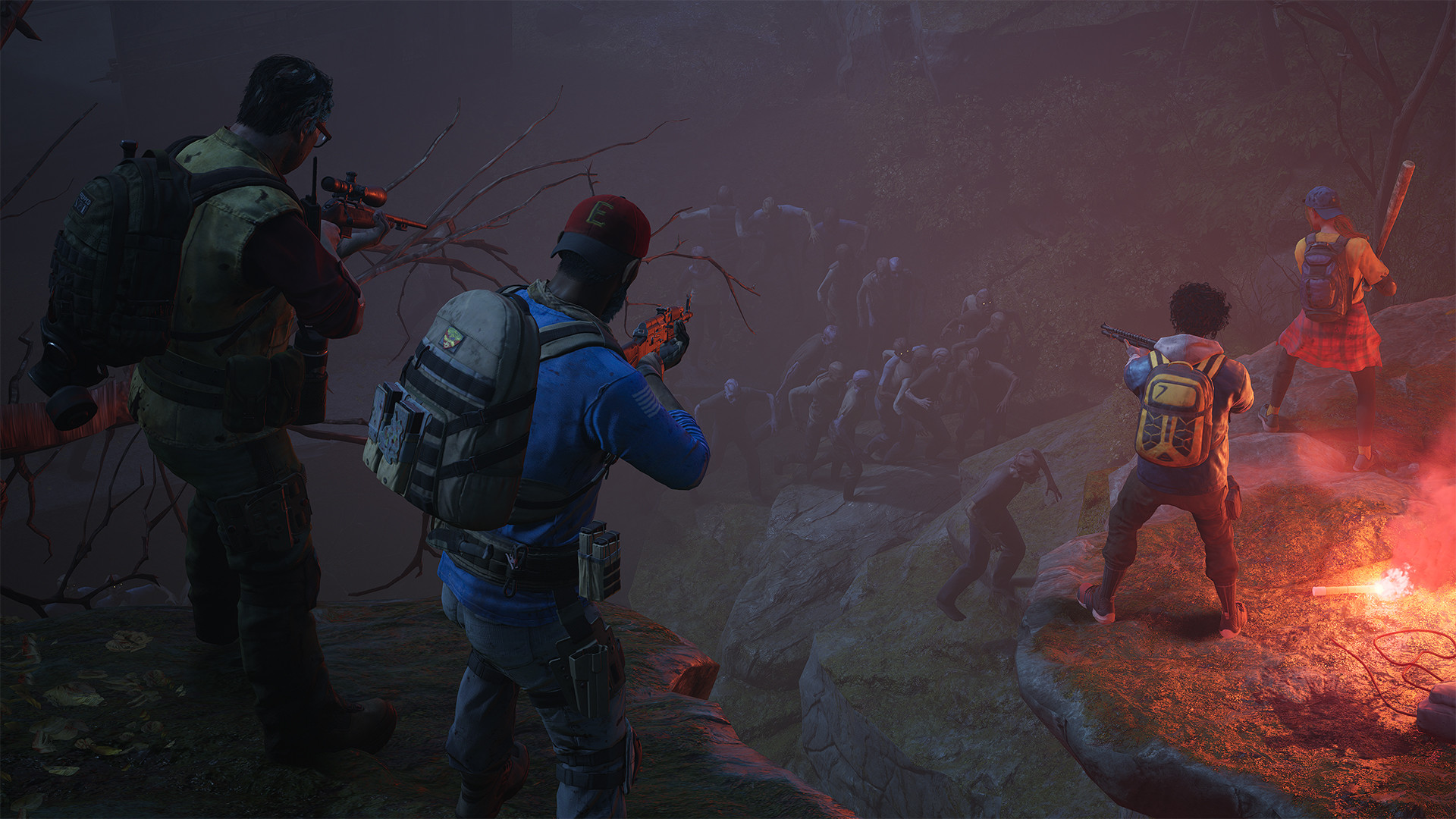
Step 5: Stick together, but not too close. This is the sweet spot nobody finds. If you're all in the same room, a grenade or a Tallboy charge wipes the whole team. If you're spread out, a Stinger grabs one of you and you die before anyone can help. The rule I use: one room apart, line of sight always. If I can see you, I can help you. If I can't see you, you're about to die alone.
Pro tip that took me 200 hours to figure out: You can hold E (or interact key) near a weapon to instantly swap attachments between weapons. That red dot on your white SMG? You can move it to that blue rifle on the ground. This works with stocks, muzzles, and magazines. I wasted entire acts carrying two weapons because I didn't know I could strip parts. Do this every single time you find a better weapon.
Things the tutorial doesn't teach you
Alright, you've got the basics. Now let's get dirty. These are the techniques that separate the players who finish Nightmare from the ones who quit at Blue Dog Hollow.
1. The Ogre fight is a sprint, not a battle. Most new players stand and fight the Ogre. Bad idea. The Ogre has 16,000 HP on Recruit and over 30,000 on Nightmare. That's more HP than a Warhammer boss. You're not supposed to kill it. You're supposed to run past it. In the mission "The Crossing," there's a timed gas can objective. Ignore the Ogre entirely. Throw the cans, let the AI handle it, and sprint to the safe room. I've watched teams spend 15 minutes fighting an Ogre while the corruption cards stacked more hordes on top of them. Stop fighting. Move.
2. The Flamethrower is a trap weapon. Everyone sees the fire and thinks "crowd control." The Flamethrower does 45 base DPS but ramps to 120 after 3 seconds of continuous fire. Sounds good, right? The problem is fuel. You get one canister per pickup. That's about 6 seconds of fire. Then you're empty, it takes 4 seconds to reload, and you're standing there holding a paperweight while a Tallboy is winding up. The Flamethrower is good for exactly one thing: burning the nest nodes on "Body Dump." For everything else, take a TAC14 shotgun or an M249. Better ammo efficiency, better damage per second, and you can actually reload in combat.
3. Bait the Tallboy charge. This is the most important combat tip in the entire game. Tallboys are scary because they 1-shot you on higher difficulties. But they have a tell: they raise their arm, roar, then charge. If you sprint perpendicular to them right as they start the roar, they'll miss completely. Then they're stuck with their arm in the ground for 2 full seconds. That's 2 seconds of free headshots. I've killed Crushers without taking damage using this. It's the first thing I teach every new player. If you die to a Tallboy, it's because you stood still or ran backward. Move sideways.
4. Use the "Bomb" accessory as a last resort. The bomb is not a room-clear. It's a "oh shit" button for Breakers. The Breaker has a moment when it's stunned after its ground slam — throw the bomb then. It does 1,500 damage to a single target but spreads that damage if you hit multiple enemies. Against a horde, it kills the commons and leaves the Specials angry. Against a Breaker, it's almost half its HP bar. Save your bombs for bosses. I keep mine in the same inventory slot every run so I don't fumble the keybind when the Ogre shows up.
5. The Sharice support character is underrated. Everyone picks Doc for heals. Doc is fine. But Sharice gives 10% trauma damage resistance to the whole team and her ability to create armor plates on revived allies is insane. Trauma damage is the thing that actually kills you on higher difficulties — that max HP you lose permanently. Sharice halves that. She also gives bonus melee damage, which combos with Dead by Daylight's "run away and hide" mentality, except here you run toward the monsters. Try her. Drop Doc. Thank me later.
6. Card synergies matter more than individual card strength. "Mugger" gives you temporary health on melee kills. "Face Your Fears" gives you temporary health when you kill an enemy within 2 meters. "Brazen" gives you 60% more melee speed. Alone, each of these is okay. Together, they turn you into a lawnmower that heals itself. That's why netdecking is fine for this game — the top builds on streaming sites are tested. Steal them. Don't reinvent the wheel. I run a melee Doc build that uses "Vanguard" and "Battle Lust" to keep the team alive while I swing. It's not original. It works.
7. The Ogre's weak point is its back, not its head. Everyone shoots the head. The head armor is thick. The back is a giant glowing sack. If you get behind an Ogre — which is hard, but possible with sprint speed cards — you do 3x damage to that sack. I've seen a single Barrett .50 cal shot deal 2,400 damage to an Ogre's back. That's a kill in 7 shots on Veteran. Don't face-tank the Ogre. Flank it.
Five ways I threw runs
I have a running list of the stupid things I did so you don't have to. Some of these are obvious in hindsight. Some are absolutely not obvious until you've done them four times.
Mistake #1: Reloading after every kill. This is the most common FPS habit that will kill you in B4B. You shoot 3 bullets, reload, a Stinger grabs you, and your weapon is empty. The reload cancel is real, and it's slow. Get into the habit of counting your shots. The M4 has 30 rounds. Reload at 10, not at 28. Save yourself the 2 second window where you're defenseless.
Mistake #2: Opening every door. The game generates triggers. Some doors are traps. Some doors are silent horde spawns. I opened a door on "The Sound of Thunder" and a Hag came out and ate two teammates before we could shoot it. The game doesn't tell you which doors are death traps. The solution? Only open doors when you're ready to fight. If your team is looting a room, don't open the next door. Clear the room, then open. That "ambush" door is only dangerous if you're not ready.
Mistake #3: Ignoring the "Trauma" bar. You get hit, you lose health. You take trauma damage, your max HP shrinks. The screen shows your health bar as red (regular) and grey (trauma). Most new players only look at the red. Then they hit a healing station and wonder why it only healed 20 HP — because the trauma damage ate the rest. Bandages and pills only heal trauma indirectly. Use medkits for trauma healing. I keep one medkit for every three bandages in my inventory. That ratio keeps my max HP high enough to survive a Tallboy swing.
Mistake #4: Not using "Tool Kits" on the right doors. Tool kits open locked rooms. They also work on alarm doors. An alarm door is marked with a red light. If you open it without a tool kit, it triggers a horde. With a tool kit, it opens silently. I used to save tool kits for the "free upgrade" rooms and ignore alarm doors. Then I learned that alarm doors are everywhere and tool kits are rare. Now I use tool kits only on alarm doors and avoid the upgrade rooms entirely. The upgrade is not worth the horde. Trust me.
Mistake #5: Playing with the wrong team comp. Four DPS characters is a recipe for disaster. You need at least one healer, one tank, and two utility/damage. If your team has no Doc, no Sharice, and no Hoffman for team ammo, you will run out of resources by the third mission. I once played a run with four sniper characters. We died on the first boss because nobody could clear commons. The game wants balance. Don't be stubborn.
The questions nobody answers clearly
Q: What difficulty should I start on?
Recruit. Period. Not Veteran, not Nightmare, not No Hope. Recruit is the tutorial that the tutorial should have been. If you skip it, you will hate the game. I started on Veteran because I thought I was good. I was not good. I was humiliated. Play Recruit until you can complete an Act without dying once. Then move to Veteran. No shortcuts.
Q: How do I get more cards?
Supply lines. You spend supply points (earned from missions and achievements) to unlock card packs. There's no way to grind faster except to play well and not die. The best cards are in the "Warrior" and "Medical" supply lines. Don't waste points on cosmetics early. Cards matter. I spent my first 10,000 points on skins. I regret everything.
Q: Is the melee build actually viable?
Yes, but only with the right cards. If you try melee without "Meth Head" (reduces stamina cost on melee swings), you will attack twice and be winded. If you have "Vanguard" (temp health on melee kill), you can tank hordes. The best melee weapon is the Bat — it has the best balance of speed, damage, and stagger. The Machete has higher DPS but less stagger. The Fire Axe is slower but hits like a truck. For No Hope, I run Bat and "Brazen" for infinite stamina. It's not broken. It's just consistent.
Q: What's the deal with "Alarm Doors" I mentioned earlier?
They're marked by a red glow and an alarm sound loop. If you interact with them without a tool kit, a horde spawns and the door locks you in the room. Yes, it locks you in. You have to fight the horde in that room. It's a death trap. I've lost runs because a teammate opened an alarm door "by accident." There's no accident. The door has a giant red light. Use a tool kit or leave it alone.
Q: Can I play solo?
You can, but the bots are not good. They don't use cards, they don't loot, and they'll stand in fire. Playing solo is harder than playing with randoms, which is a game design choice I'll never understand. If you must play solo, use the "Hoffman" bot because he gives team ammo. The "Walker" bot is okay. The "Doc" bot will not heal you. I've watched a Doc bot stand next to my downed body for 30 seconds while a Stinger chewed on me. Solo is a challenge run. Do it for fun, not for progress.
Q: How do I deal with the Hag?
The Hag is the worst enemy in the game. It runs away when damaged, it eats players, and it has 8,000 HP. The trick is don't let it eat anyone. If a player gets grabbed, shoot the Hag in the face — it stuns briefly. If you have a stun gun, use it. If you have a flashbang, throw it. The Hag will flee after taking enough damage, which means you survived. Killing it is possible but requires coordinated fire from the whole team with high-DPS weapons. I've killed a Hag with three Barretts and a prayer. It took 12 seconds of nonstop headshots. Usually, it's not worth it.
Q: What's the best deck for a beginner?
Here's a simple deck that works on all difficulties. Start with "Copper Scavenger" — then add "Money Grubbers" — then "Scar Tissue" — then "Face Your Fears" — then "Vanguard" — then "Ridden Slayer" — then "Life Insurance" — then "Second Chance." The rest of the 15 slots are filler. This deck gives you economy, survivability, and melee healing. It's boring. It works. You can replace "Vanguard" with "Large Caliber Rounds" if you prefer guns. But this deck will keep you alive long enough to learn the maps.
If you're still struggling, go watch some streams. The community is actually friendly. Head over to Vermintide 2 if you want a more fantasy-flavored horde experience, but B4B's card system is what makes it unique. Learn it, love it, or hate it — but at least understand it before you call it broken.
Sign in to post a comment.
Sign in with GitHub to join the discussion.
💬 Comments
What players are saying:
Dude, the tip about holding E to swap attachments just saved me from quitting the game. I had 100 hours and never knew that. Also, the Tallboy baiting trick is legit. I went from dying every run to clearing Veteran without a scratch. Write more guides like this.
Good guide overall, but I disagree on the Flamethrower being a trap. In a coordinated team with ammo cards, it melts Breakers in seconds. You just have to run it with a secondary weapon that covers its weaknesses. The Machete clears commons, Flamethrower burns bosses. Try it before you hate it.
The section on trauma damage finally explained why my heals felt worthless. I was running bandages on Nightmare and wondering why I was still at 60 HP. Switched to medkits and now I actually survive. Also, your tip about alarm doors and tool kits? I wasted so many runs on those. Thanks for the clarity.