
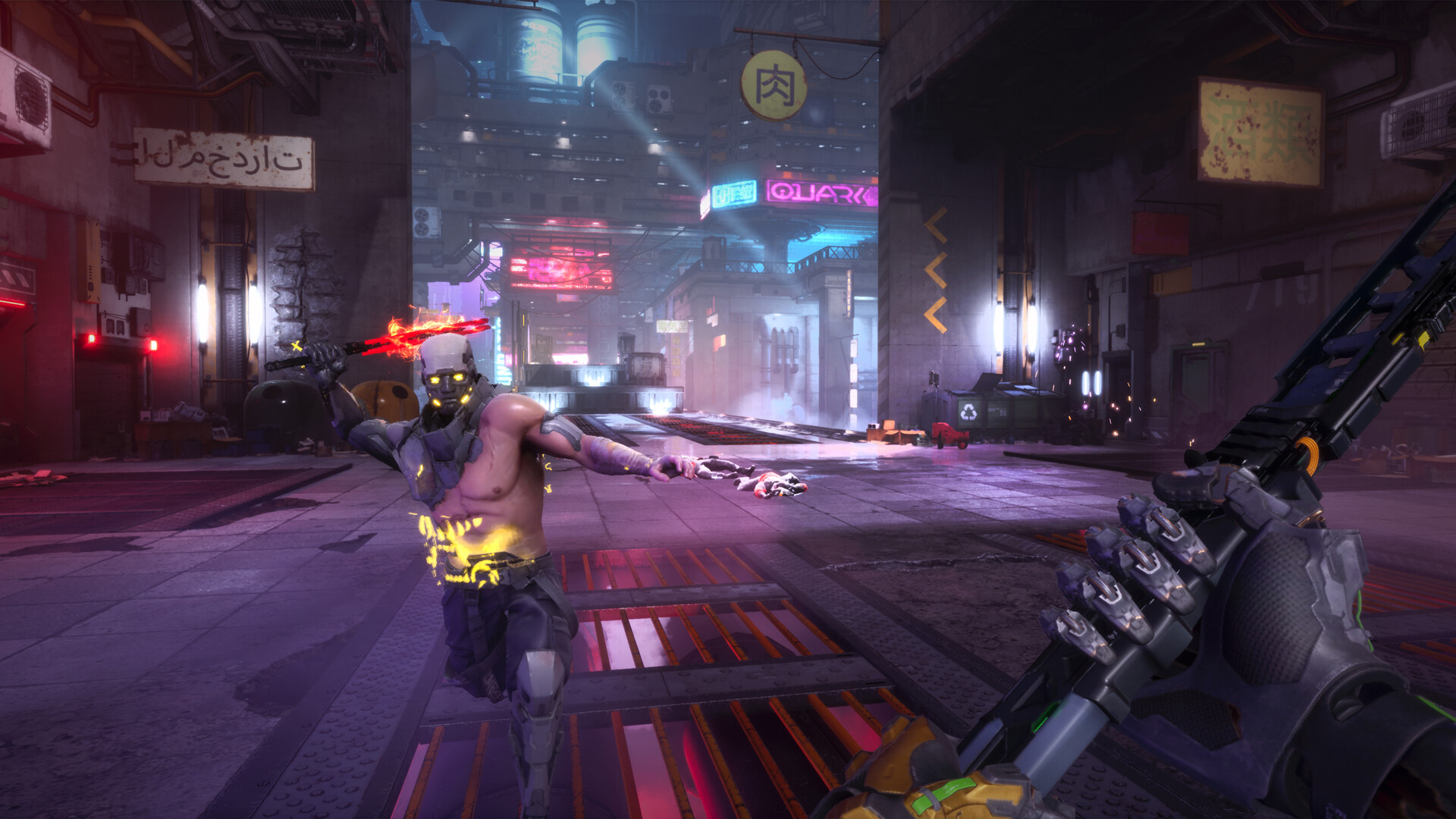
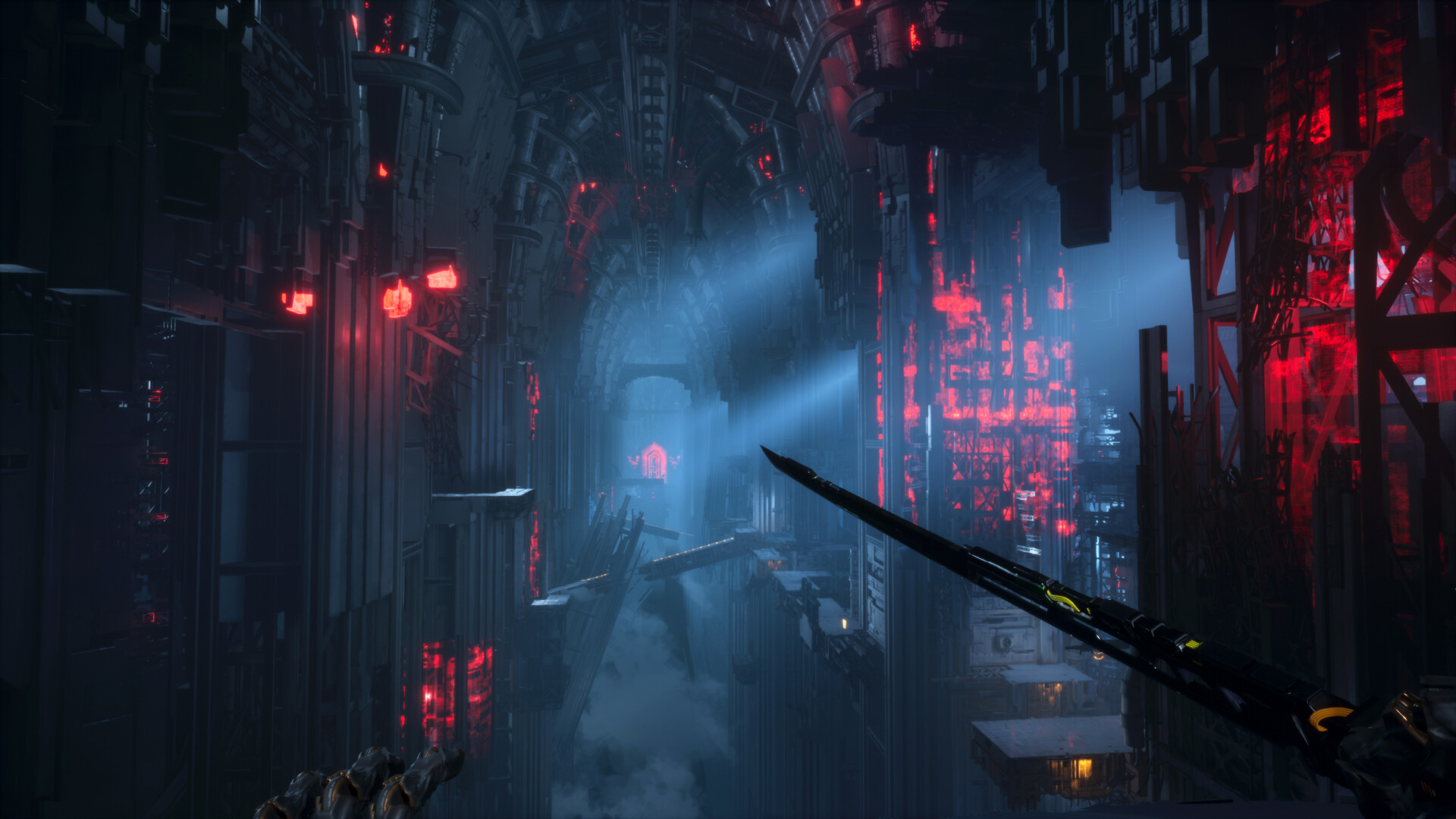
Skip the bullshit, here's what's inside:
Why I'm still playing this masochistic nightmare
I'll be straight with you: I bought Ghostrunner 2 on launch day, spent the first four hours dying to the same elevator shaft like a goddamn pinball, and almost refunded it. I was furious. The game felt unfair. The wall-running felt sticky in all the wrong ways, and the enemies seemed to have aimbot that would make a cheating CS:GO player blush.
But something kept me coming back. That one perfect run—where you slice through five enemies without touching the ground, deflect a bullet back into a sniper's face, and land on the next platform like you meant to do it—hits harder than any victory royale or boss kill I've ever experienced. This game is a rhythm-action puzzle wrapped in cyberpunk noir, and it demands you treat every encounter like a dance you haven't learned yet.
I've now beaten the game on Hardcore and platinumed it. I've also helped dozens of new players in the Discord server. This guide is every piece of hard-won knowledge I wish someone had shouted at me before I threw my controller into the wall. If you're struggling, you're not bad at games. You're just fighting the game's weird language. Let me translate.
The walls you'll hit (and punch through)
Let me name the exact moments that made me rage-quit and come back an hour later:
- The first rooftop gauntlet with the shotgun drones. You're still learning the movement, and suddenly you're getting peppered from three angles while trying to figure out which wall you can actually run on. I died here 37 times before I realized I could slide under the first drone's shot instead of trying to parry it.
- The Tom boss fight. Holy shit, Tom. He's the first real skill check, and he exposes every bad habit: panic-dashing, not using your sensory boost, treating the fight like a DPS race instead of a pattern recognition puzzle. I spent my first five attempts trying to "out-aggro" him and got deleted every time.
- The disappearing platform sections in Dharma City. The game doesn't tell you that some platforms have a 0.8-second despawn timer after you touch them. You'll overshoot, panic, and fall into the abyss. Every. Single. Time.
- The final gauntlet before the credits. No checkpoints. No health regen. Just forty-five minutes of pure, concentrated pain where one misstep sends you back to the start. I had to walk away twice before I cleared it.
The core issue is that Ghostrunner 2 punishes hesitation harder than any game I've played since Sekiro: Shadows Die Twice. If you stop moving, you die. If you don't have a plan for the next 3 seconds, you die. If you try to "play it safe," you die even faster. The game is a relentless clock that only stops ticking when your body hits the ground.
But here's the secret: once you internalize that death is the primary learning tool—not failure, not punishment—the game clicks. Every death teaches you one thing: "don't stand there," "that gap is 2.3 meters too wide for a basic jump," "the shotgun guy fires on a 1.5-second loop." Treat each run like data collection, and you'll stop feeling frustrated.
Day one: what the tutorial doesn't teach you
The tutorial teaches you how to wall-run, slide, and grapple. It does not teach you how to survive. Here's your actual day-one curriculum:
Rebind your controls immediately
The default keybinds are fine for a robot, but you're human. I moved Sensory Boost to a mouse thumb button. I put Slide on left-Ctrl and Crouch on C. This lets me slide-jump without contorting my hand like I'm playing Starcraft. Do whatever feels natural, but do not keep the defaults if they feel clumsy. I spent my first hour dying because I couldn't hit Shift+Space+W while also trying to aim.
Learn the slide-jump before anything else
This is the single most important movement tech in the game. Slide + jump gives you more distance than a normal jump—about 40% more forward momentum. You can chain slide-jumps across flat rooftops faster than running. More importantly, slide-jumping changes your hitbox mid-air, letting you dodge bullets that would hit a standing jump. Practice it in the training room until you can do it without thinking. I promise you, if you can't slide-jump reliably, the second level will eat you alive.
The sensory boost is not optional
Your Sensory Boost (the slow-mo ability on cooldown) is not a panic button. It's a planning tool. Pop it when you enter a new room to scan enemy positions, bullet patterns, and platform layouts. In the first second of slow-mo, you can see which enemies are facing you, which ones have shotguns (they have a tell: they crouch slightly before firing), and which platform has a red explosive barrel. I use it on a 10-second cycle in every combat room. If you're not using it, you're fighting blind.
Parry is for bullets, not melee
The sword parry works on most ranged attacks, but it has a wind-up of 0.2 seconds and a recovery of 0.3 seconds. If you try to parry a point-blank shotgun blast, you'll eat the damage because the animation locks you. Parry from mid-range, and never parry more than two bullets in a row—enemies will rush you while you're recovering. Also, some yellow-glowing attacks cannot be parried. The game doesn't tell you this. You'll learn it the hard way like I did.
Upgrade order: Grapple first
You get upgrade points from finding collectibles and completing side objectives. Rush the Grapple Upgrades before anything else. The base grapple has a 2.5-second cooldown and limited range. The first upgrade cuts it to 1.8 seconds and extends range by 30%. The second upgrade lets you grapple to moving platforms and enemies. This completely changes how you navigate levels. I ignored the grapple for my first playthrough and died to platforming gaps that the grapple would have trivialized. Don't be me.
Advanced tech that separates gods from corpses
Okay, you've got the basics. Now let's talk about the stuff that turns you from a struggling runner into the ghost the game wants you to be.
The "wall-run cancel" for impossible gaps
Some gaps in the game are deliberately too wide for a single jump or even a slide-jump. The solution: start a wall-run, jump off, then immediately re-grapple back to the same wall and jump again. This gives you a second burst of upward momentum that clears gaps the designers swear are impossible. I found this by accident when I panic-spammed the grapple during the Dharma City tower climb. Now I use it religiously. The timing is tight—you have about 0.4 seconds to re-grapple after leaving the wall—but it's a game-changer.
Pro tip: The "slide-jump-parry" combo. If you're running toward an enemy with a shotgun, slide into their low shot (your hitbox shrinks), jump over the next shot, and parry the third. It sounds impossible, but the timing is exactly: slide (0.3s), jump (0.2s wait), parry (press as soon as you see the muzzle flash). I spent an entire afternoon in the training room perfecting this against the dummies, and now I can clear the first gauntlet without taking a single hit.
Bullet deflection is a positioning tool, not just damage
When you deflect a bullet (parry at the perfect timing), it returns to the enemy with double damage. But here's the real trick: deflected bullets can hit other enemies in a line. If you're fighting a group, position yourself so that the front enemy's bullet, when deflected, travels through the two behind them. A single parry can kill three enemies in one shot. I've done it twice in actual runs, and it feels better than any ult in any game. Practice the angle by standing slightly to the right of the front enemy—the bullet returns on a vector that naturally sweeps left to right.
The dash is not a dodge, it's a reposition
Your dash has invincibility frames for the first 0.15 seconds only. After that, you're vulnerable. So don't mash dash to escape—use it to cross through an attack's hitbox at the exact moment it would connect. I dash toward enemies more often than away from them, because behind them is where I want to be for the kill. The game rewards aggression with clear sightlines on your next target. Play scared, and you'll never leave the first corridor.
Weapon swapping mid-combo
Once you unlock the Tempest (shockwave) and Shuriken (long-range stagger), you can cancel the recovery animation of your sword swing by immediately using a gadget. The timing is: swing → as soon as the blade connects (about 0.1 seconds after the hit sound), press the gadget button. This lets you stagger a second enemy while the first is still dying. It breaks the game's pacing in your favor. I use shuriken for this because it has no cooldown and the stagger lasts 1.2 seconds—plenty of time to close the gap and finish them.
The "floor is lava" mental mode
The most advanced thing you can do is stop thinking about the ground entirely. Aim to never have both feet on the floor for more than 0.5 seconds during combat. If you're on the ground, you're a target. Wall-run, grapple, slide, jump—keep a constant loop of movement. I literally whisper "lava" to myself when I start a run, and it tricks my brain into treating the floor like instant death. It's stupid, but it works. My clear times dropped by 40% once I stopped standing still.
Common mistakes to avoid (what got me killed)
I have a list of dumb deaths that I've personally verified. Learn from my shame:
- Over-committing to a kill. You see an enemy, you slide toward them, and you swing. But there's a second enemy behind a crate. You get shot in the back because you tunnel-visioned. Always know where the next three enemies are before you kill the first. Sensory Boost exists for this reason.
- Jumping from height without a plan. The game gives you a lot of vertical space, and it's tempting to drop down for a sick assassination. But once you drop, you can't re-grapple back up quickly. I've dropped into killboxes where the only exit was back the way I came, and I died because I couldn't climb back in time. Scout your landing zone from the highest point possible.
- Ignoring the audio cues. Every enemy type has a unique sound before they attack. Shotgun enemies grunt. Snipers have a mechanical whine. The melee bots click their claws. I played the game on mute for my first three runs (bad habit from grindy games) and missed every cue. Turn the sound up. The game's audio design is the best I've heard since Titanfall 2, and you're handicapping yourself if you don't use it.
- Holding down the sprint button. Sprint (which is always on by default) locks you into a linear path. If you need to make a sharp turn, release sprint briefly, turn, then re-engage. The game's momentum system works against you if you try to turn at full speed. I lost a Hardcore run because I tried to 90-degree turn while sprinting and slid straight off a ledge.
- Not abusing the respawn reset. When you die, the game resets you to the last checkpoint and refills your gadgets and ability cooldown. This means you can use a shuriken or a Tempest blast right before a risky jump, knowing that if you die, you get it back. I treat it like a free resource: "If I die, I lose nothing, so I might as well use everything."
- Fighting the camera. The camera has a slight lag to create cinematic feel. Don't fight it—let the camera lead your movement. If you're wall-running and the camera pans right, trust it and jump in that direction. The level designers built the path to align with the camera movement. I fought it for hours and kept missing jumps until I realized the camera is my ally, not my enemy.
Questions nobody asks but everybody needs answers to
Q: How do I get the "True Ending"?
A: You need to collect all 8 data logs and complete the secret cybervoid section in level 11. The data logs are hidden off the main path, usually behind breakable walls or after tricky wall-run sequences. If you miss one, you'll get the normal ending, which is fine but less satisfying. I used a video guide for the last two—they're hidden like Dark Souls secrets.
Q: Can I beat the game without using gadgets?
A: Technically yes, but you're making your life exponentially harder. The Tempest is mandatory for one enemy type (the shielded bots) because you can't sword them from the front. The shuriken is optional but makes the gauntlets before the final boss 60% easier. Don't be a purist. Use your tools.
Q: Why do some platforms disappear after I touch them?
A: The game has a "timed" platform mechanic that's not explained. Most platforms have a 1.2-second timer before they despawn after contact. A few (visible by their slightly different color) have a 0.8-second timer. The trick is to never stop moving on them; use them as a springboard, not a resting spot. If you linger, you fall.
Q: How do I beat the final gauntlet with no checkpoints?
A: Take breaks. Seriously. I tried to brute-force it in one sitting and got progressively worse. Go section by section. The gauntlet has 7 distinct rooms. Learn each room's pattern separately, then chain them. I wrote down the enemy spawn order for the third room on a sticky note because I kept forgetting the sniper position. Also, use the slide-jump cancel I mentioned above—it saved me in room 5 where the gap is too wide for a normal jump.
Q: Is the game worth playing on a controller vs. keyboard?
A: I prefer controller for comfort, but keyboard gives you faster camera control for deflecting bullets. If you're on controller, increase the camera sensitivity to 75% or higher—the default is too slow for the reactive parries you need. I switched to keyboard for the last two levels because I needed the precision, but it's personal preference. Both work.
Q: The game feels like Doom Eternal mixed with Mirror's Edge. Is that accurate?
A: Yeah, that's the closest description. It's the movement of Mirror's Edge (first-person parkour) with the combat flow of Doom Eternal (keep moving, prioritize targets, resource management). But Ghostrunner 2 is more punishing than either—one hit kills you, not three or five. It demands precision where Doom Eternal allows improvisation. If you loved both those games, you'll love this. If you hated either, be warned.
Disclosure: This guide may contain affiliate links. If you purchase games or products through these links, we may earn a small commission at no extra cost to you. This helps support our work in creating free, high-quality guides. All opinions and recommendations are our own.
Sign in to post a comment.
Sign in with GitHub to join the discussion.
💬 Comments
What players are saying:
I've been stuck on the Tom boss fight for two days. Read your section about pattern recognition vs. DPS racing and finally beat him on my third try after. The slide-jump parry combo is the real deal—never would have thought to chain them like that. The guide saved me from uninstalling.
Good guide, but I disagree on the upgrade order. I rushed the sword damage upgrades first and found the grapple fine at base level. The extra damage on parries made the early game much smoother for me. Different strokes, but your tips about sensory boost scanning changed how I play. Solid advice overall.
Finally someone who admits they spent hours on the disappearing platforms. I thought I was losing my mind. The wall-run cancel trick for the big gaps in Dharma City literally got me through a section I had given up on. Write more guides like this, please. No fluff, just real pain.