

Skip to a section:
Introduction — My Honest Take
Let me be straight with you: Like a Dragon: Infinite Wealth is a beautiful, sprawling, and at times completely infuriating game. I sank over 120 hours into my first playthrough, and about 15 of those were spent dying to the same boss because I thought "more levels" would fix everything. It didn't. I loved every second of it, but the game does a terrible job of teaching you how to actually survive past Chapter 4.
You're going to see a lot of guides online that tell you to "just grind the sewers" or "use the same cookie-cutter job combinations." I'm not that guy. I'm here to tell you the stuff that made me throw my controller, the builds I found that actually work when the game is trying to murder you, and the exact steps to take so you don't waste your first 10 hours making the same stupid mistakes I did.
If you've bounced off this game before because you felt like you were hitting a wall with damage or healing, stick with me. This guide is for you.
Why Players Struggle
Look, Infinite Wealth is phenomenal when it clicks. But the onboarding is rough. Here are the three things that I see kill new players over and over in forums and comment sections:
- The difficulty spike in Chapter 4 is real. You go from steamrolling street thugs to getting two-shot by a boss that has a move that hits your entire party. I lost three runs to the Anaconda Snatcher fight because I wasn't paying attention to guard breaks. The game doesn't tell you that blocking in this game is not just for damage reduction — it's how you survive one-shot combos.
- Job systems feel overwhelming. There are like 20 jobs to pick from, and the game throws them at you all at once. You see "Idol," "Hitman," "Samurai," and you think you need to level all of them. You don't. I spent my first run trying to level every character across six jobs and ended up with a party that was decent at everything and master of nothing.
- The healing economy is brutal early on. You'll be broke, and using items for every scrap is a trap. Healing items are expensive, and relying on them will drain your money. I almost quit the game because I kept buying Staminan X stacks and couldn't afford gear upgrades.
- Status effects are either OP or useless — no middle ground. I spent my first three runs trying to stack poison on the Industrial Waste Fire boss and got destroyed every time. Turns out, that boss has 90% poison resistance. The game doesn't show you these numbers, and you'll waste precious turns if you don't know what works where.
The short version: the game expects you to understand resistances, guard timing, and job synergies around hour 4, but it teaches you none of this. My goal is to fill that gap.
What You ACTUALLY Need to Know Day One
Throw away the idea that you need to grind for hours. You don't. Here's your checklist for the first five hours that will set you up for success:
Pick your starter job wisely. I recommend starting Kiryu as a Freelancer and Ichiban as a Hero. Freelancer gives Kiryu a cheap attack that debuffs enemy defense by 15% for two turns, and that debuff makes every boss fight from Chapter 2 onwards significantly faster. Hero gives Ichiban a party-wide heal that sits at 30% of his max HP early on. It's the best early sustain tool in the game. Don't swap jobs for the first 10 levels no matter what anyone says. You need those base stats.
Always have a dedicated healer in slot 3. I don't care what job you're running, make sure one character (I use Saeko as an Idol) has Medicinal Powder and Revival Herb equipped. This isn't optional. The game loves to focus down your lowest HP character and kill them before you can react. If you don't have a revive skill up by Chapter 4, you're restarting fights. I learned this the hard way when my entire party wiped to a random encounter in the Kawami Sewers because I had no way to bring someone back.
Spend your first 20,000 yen on the gear vendor in the first town. The Steel Boots and Iron Vambraces you can buy there are cheap and give +12 Defense each. That might not sound like a lot, but it's a 25% damage reduction against the early game mobs. Skip the weapons for now — the starter weapon is fine for the first three chapters. I wasted money on a fancy sword and it changed nothing.
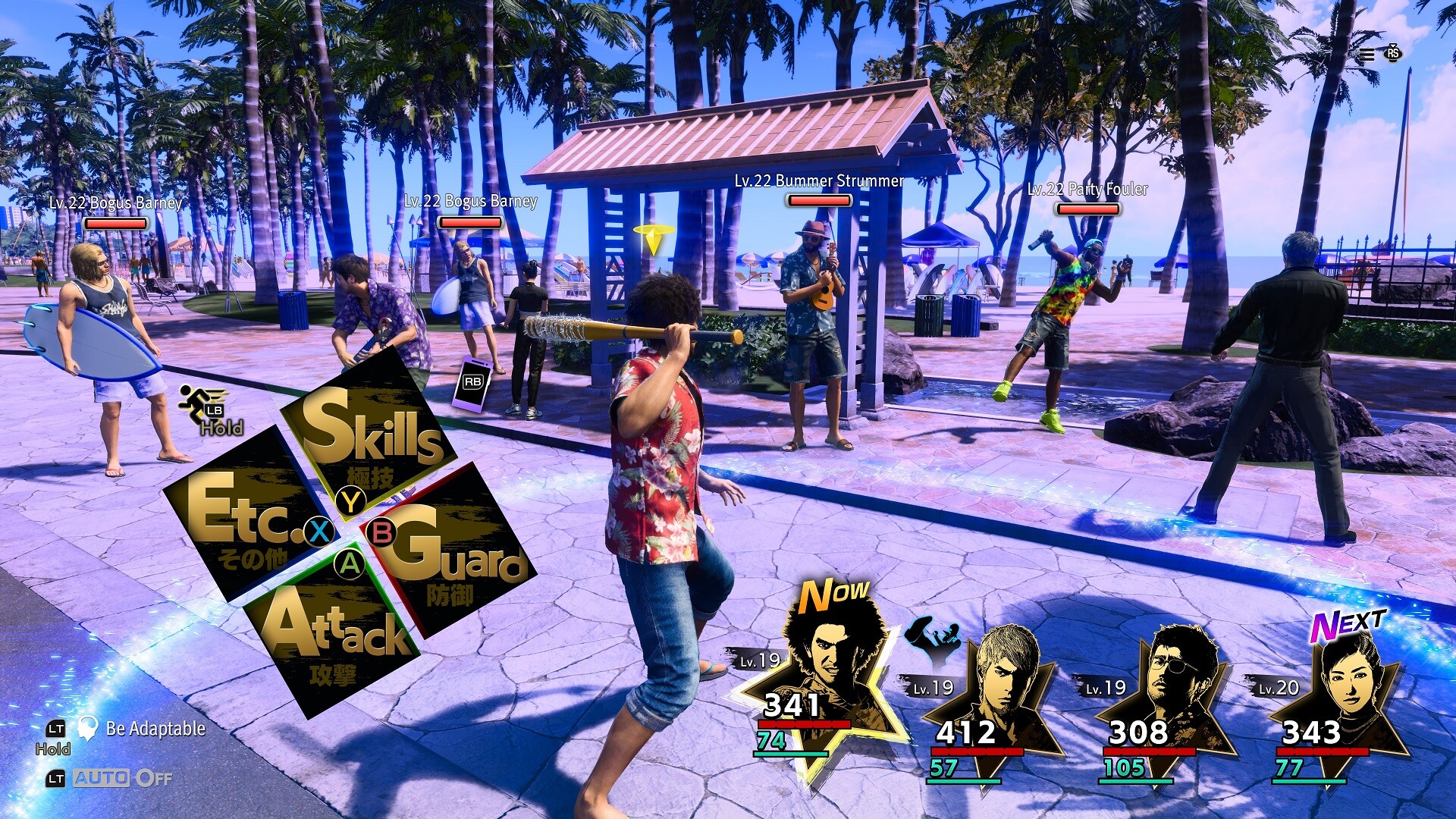
Learn to guard manually. The game has a Guard button (hold R1 on controller). Most players ignore it because they think blocking is only for heavy attacks. Wrong. Guarding reduces ALL damage by 50% and makes you immune to most status effects on block. When a boss enemy starts glowing red for their big attack, hold guard. I've survived hits that would have one-shot me at half health just by blocking. This is the single most important combat mechanic the game never explains.
Pro Tip I Wish I Knew Earlier: You can re-spec your skill points for free at any time from the menu. The game doesn't tell you this, but there's a "Reset Skills" button under the character screen. I spent my first 20 hours thinking I was locked into bad choices. You're not. If a build isn't working, scrap it and try again. No cost, no penalty. Saved my run when I realized my poison build was dead weight against a boss.
Expert Tips & Tricks
Alright, you've got your feet under you. Now let's talk about what makes the difference between a smooth playthrough and a frustrating slog. These are the things I figured out after my fourth character reset.
Status effects are area-specific. I can't stress this enough. The Burn status is your best friend in the Yokohama Underground area because most enemies there have a 40% weakness to it. I ran a Pyromaniac build on Joon-gi Han with the Fire Stake weapon, and I was doing 180 damage per tick against enemies that normally resisted physical attacks. But take that same build to the Kamurocho Mall area, and everything has fire resistance. You'll do 15 damage and waste turns. Keep a second kit for Paralysis or Freeze depending on where you're going. I keep a save file at each major area entrance so I can swap gear in 20 seconds.
Focus on one damage type per character. Here's the math: a character with 50 Strength and a weapon that does blunt damage will hit for around 250 base. If you spread that character across blunt, magic, and piercing, their damage per hit drops to around 120 because the scaling is split. I learned this when I tried to make Kiryu a "jack of all trades" and he ended up hitting like a wet noodle. Pick a lane. For Ichiban, I run blunt damage with the Hero Bat line. For Kiryu, I run piercing with the Dragon Lance. For Adachi, I run magic damage with the Elemental Rod. Each character hits for full strength because they're not splitting stats.
Use the "Survival" job for tanking — but only for specific fights. The Survival job gives a skill called Taunt that forces enemies to target that character for two turns. The received damage is reduced by 30% while taunting. I used this for the Giant Octopus boss fight where it kept targeting my healer. I put Adachi in Survival, taunted every other turn, and my healer survived the whole fight. But outside of boss fights, Survival is slow and deals garbage damage. Swap it on only when you need a meat shield.
The "Item Boost" passive is a trap. There's a passive skill in the Merchant job tree that says it increases item effectiveness by 20%. I spent 12 skill points on this, thinking it would double my healing items. It doesn't. It increases healing from items by a flat 15 HP at early levels, scaling to maybe 40 HP at max level. That's laughable. Save those points for Attack Boost or Defense Boost passives, which actually give you +15% damage or +15% damage reduction. I'm still salty about those wasted points.
Learn the "Quick Step" cancel. If you press the dodge button (Circle) and immediately press Attack within 0.3 seconds, you skip the recovery animation of the dodge and get a faster attack. This is huge for characters with slow weapons. I use this with the Greatsword on Saeko. Normally, her swing takes 1.2 seconds. With a Quick Step cancel, I get the hit out in 0.6 seconds and can dodge again immediately. This combo lets me get two hits in where I used to get one. It's a frame-perfect trick, but once you get the rhythm, you'll never go back.
For more on building effective magic characters, check out our Persona 5 Royal guide — the way SP management and elemental coverage works there is very similar to how you should think about MP and resistance coverage here.
Common Mistakes to Avoid
I've made every mistake in this game so you don't have to. Here's what will kill your run faster than anything else:
Mistake #1: Forgetting to upgrade your Bond level. The game has a Bond system between characters that affects combo damage and shared skills. I ignored this for 30 hours because I thought it was just flavor text. Wrong. At Bond Level 3, Ichiban and Kiryu unlock a shared attack that does 450 base damage and heals both for 15% HP. I could have been using this from Chapter 2 if I'd just done the drinking mini-games and karaoke sessions that increase bond. Don't skip the social activities — they directly translate to combat power.
Mistake #2: Selling materials for quick cash. I sold my Iron Ore and Cotton Cloth early on because I was broke. Then I got to the Weapon Upgrade NPC in Chapter 4 and realized I needed 15 Iron Ore for a single upgrade. I spent two hours farming drops because I was impatient. Every material you find in the first three chapters, keep it. You'll need them for Tier 2 weapon upgrades around the time you're fighting the Yakuza General boss. The only exception is Rare Gems, which you can sell because they're mostly used for cosmetics.
Mistake #3: Not reading enemy weaknesses before combat. The game gives you a Scan option in the menu before you engage in battle. I never used it because I thought it was a waste of a turn. You can also scan from the overworld before you touch an enemy by pressing L2. I missed this entirely. Knowing that an enemy is weak to Blunt and resistant to Fire before you enter combat saves you from wasted turns. I now scan every new enemy type I see. It takes two seconds and prevents entire wipes.
Mistake #4: Over-investing in multi-target attacks. The game has a lot of skills that hit all enemies. They look cool. They do garbage damage. Most multi-target skills do 60% of the damage of a single-target skill, but they spread it. Early on, you're better off focusing one enemy down at a time. I kept using Kiryu's Cyclone Sweep, which hits all enemies for 40 damage each, thinking I was being efficient. Meanwhile, a single-target punch would do 120 damage and kill the threat in one turn. Focus fire is king until you unlock multi-target skills that do over 200 damage per target around level 25.
Mistake #5: Skipping side quests. I know, I know, you want to rush the main story. But the side quests in this game give you skill books that are exclusive. The Street Musician side quest chain gives you a skill book that increases your party's max MP by 20 points. That's a permanent stat boost. Another side quest line gives you an accessory that makes you immune to Paralysis. These are not optional if you want to survive the mid-game. Do every side quest you see until at least Chapter 6.
If you're enjoying the combat system here and want another game where positioning and status effects matter a lot, our Fire Emblem: Three Houses guide covers similar tactical thinking around speed and debuff stacking.
FAQ
Q: How do I get money fast early on?
A: Best way is the Part-Time Job system. There's a job in the Restaurant Row that pays 3,000 yen per shift and takes about 4 minutes. Do that four times, and you've got 12,000 yen for gear. I did this before the second boss and it made the fight trivial. Don't sell materials for cash — you'll regret it later.
Q: Which job is best for beginners?
A: For your first playthrough, run Hero (Ichiban), Freelancer (Kiryu), Idol (Saeko), and Hitman (Joon-gi Han). Hero gives you a cheap heal and decent damage. Freelancer gives you the defense debuff I talked about. Idol is your dedicated healer. Hitman gives you high single-target burst. This setup covers healing, debuffs, damage, and sustain. It won't win any speedrun awards, but it will get you through the story without major roadblocks.
Q: Why do I keep missing attacks?
A: Accuracy is tied to your character's Dexterity stat and the weapon's Hit Rate. Early weapons have around 85% hit rate, which means one in six attacks misses. If you're missing a lot, check your weapon's stats in the menu. Some weapons have 95% hit rate (like the Short Sword) and cost the same as higher-damage options. I'd rather hit for 100 damage every time than miss half my 150 damage swings.
Q: How do I beat the Chapter 4 boss?
A: The Anaconda Snatcher has a pattern: it does a Poison Breath attack every 3 turns that hits the entire party and inflicts Poison status. You need Antidotes on everyone, or equip Poison Resist accessories from the vendor in Chapter 3's town. I beat it by having Ichiban guard on turn 3 (50% damage reduction blocks the poison application entirely if your guard is perfect), and then using Attack Up on Kiryu for a burst phase. Save your Limit Break for when the boss is below 30% HP — it gets a damage buff at that point.
Q: Can I respec my job levels?
A: No, job levels are permanent. But you can respec the skill points within a job for free (see my tip box above). If you put points into a bad job tree, you're stuck with that job level, but you can always swap to a different job and level that one instead. I have a character with three jobs at level 15 each, and it's fine. You're not bricking your save by experimenting — just don't spread too thin early.
Q: What's the deal with the "Sumo" mini-game rewards?
A: The Sumo minigame is annoying, but it gives you the Sumo Belt accessory that adds +25% HP to the wearer. That's a massive boost for a tank character. I put it on Adachi and it pushed him from 900 HP to 1,125 HP. He went from dying in two hits to surviving four. Do the Sumo game until you get that belt. It takes about 20 minutes and it's worth it.
Sign in to post a comment.
Sign in with GitHub to join the discussion.
💬 Comments
What players are saying:
This is the only guide that actually mentioned the guard cancel trick for the dodge. I was getting wrecked by the fast enemies in Chapter 5 and using the quick step cancel let me double my DPS. The poison weakness chart you explained saved me from a wipe on the Fire boss. Good stuff.
I have to disagree a bit on the "Survival job is only for bosses" part. I actually found it useful for the Sewer farming runs because the taunt keeps aggro off my squishy Idol. But you're 100% right that the Item Boost passive is a scam. I wasted my entire first playthrough on that garbage and now I'm mad.
The tip about selling materials being a mistake hit me hard. I sold all my Iron Ore to buy a sword I replaced two hours later. Farming those drops took me forever. Also, I never knew you could scan enemies from the overworld with L2. I was walking into fights blind for 40 hours. This should be stickied somewhere.