Skip to the good stuff:
First Things First: My Honest Take
Look, I’m not gonna sugarcoat it. Monster Hunter Wilds is the first time in years I’ve actually felt like a game respected my time while also demanding I get good. I’ve got about 400 hours in this thing, spread across three characters, and I still wince when I remember my first fight against the Duskclaw. That thing absolutely wrecked me seven times before I even saw its health bar drop below 80%. Seven times. I was running the basic bone set with a hammer I had no business using, and I spent more time on the ground than I did actually hitting the monster.
The game does a terrible job telling you what actually matters. It throws systems at you—Seikret mounts, Focus Mode, Wounds, Power Clashes—and says “figure it out.” The tutorial pop-ups are like getting hit with a fire hose while someone yells at you in a language you half-understand. I nearly refunded it after day one. But I didn’t. And now I can’t put the damn thing down. This guide is the hand I needed when I was getting stomped by the first major boss. I’m writing this from the perspective of a guy who has carted more times than I care to admit, and I’m gonna tell you exactly what works and what’s a waste of your time.
The core loop is simple: you hunt big monsters, you carve their parts, you make gear from those parts, and you hunt bigger monsters. But the feel of that loop is where Wilds shines. The environments are alive. The monsters have patterns that actually make sense once you stop panicking. And when you finally land a fully-charged Greatsword hit on a weak spot and watch the monster stagger? That’s pure dopamine. But getting there is a slog if you don’t know the shortcuts.
Why This Game Makes You Want to Claw Your Eyes Out
I’m gonna call out the specific things that made me rage-quit, because if you’re struggling, it’s probably one of these three things:
- The “I’m Stuck in an Animation” Problem: You commit to a swing, and the monster decides to do a 180-degree tail swipe. You can’t cancel. You’re dead. This isn’t Dark Souls—you can’t panic roll out of everything. The game punishes greedy button-mashing harder than any other action game I’ve played. I lost count of how many times I died because I thought “one more hit” was a good idea.
- Wounds Are Not Obvious: The game tells you to “attack wounds” for bonus damage, but it never explains that some weapons are specifically designed to pop them. I spent my first ten hours slapping monsters with a Lance, wondering why wounds never broke. Turns out the Lance is great for poking, but you need a weapon with a big, heavy hit—like a Hammer or Greatsword—to actually trigger a wound break for a knockdown. I had to browse a wiki to figure that out, which is stupid.
- The Weight of Bad Habits: If you come from Monster Hunter World or Rise, you might think you know how this works. You don’t. Wilds changed the timing on pretty much every weapon. The Longsword’s Spirit Helmbreaker, for example, has a slower startup and a tighter window. I spent an entire afternoon trying to play like I was in Rise and got pancaked by a Chatacabra. This is a new game—treat it like one.
The biggest pain point? The game doesn’t teach you positioning. It teaches you to hit the monster, but it doesn’t teach you where to stand. Standing in front of a monster’s head is a death sentence against creatures with charge attacks. Standing behind the rear legs is safe but less damaging. Learning where to plant your feet is 80% of the skill curve, and the game just expects you to figure it out.
Day-One Survival: What I Wish I Knew Before My First Big Fight
Alright, let’s get practical. You just started the game. You’ve got your starting weapon (probably the Sword & Shield or the Greatsword, depending on your edition). Here’s the stuff the game won’t tell you that will save your ass:
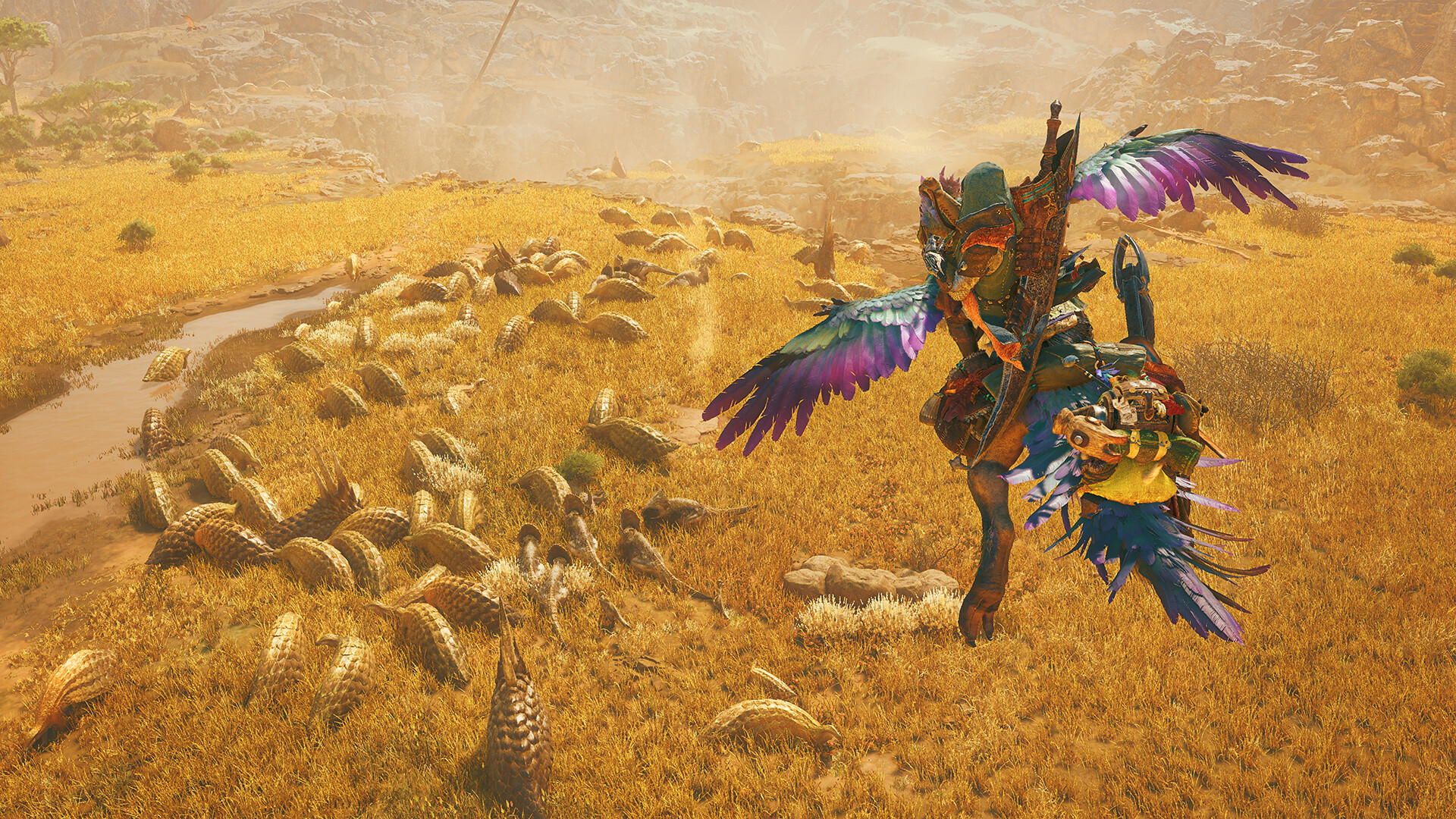
- Your Seikret Is a Lifeline, Not a Taxi: You can call your mount at any time with L2 + Square (or whatever your button prompt is). Use it to flee combat, heal, sharpen your weapon, or reposition. You can even sharpen your weapon while riding. I cannot stress how much time this saves. If you’re low on health and the monster is roaring, call the bird and GTFO. It’s not cowardice; it’s strategy.
- The Radial Menu Is King: The default item bar is garbage for quick use. Go into your settings and set up the radial menu immediately. Put your Potions, Mega Potions, Antidotes, and Whetstone on easy thumbstick flicks. The game defaults to “Type 1” controls for this, which requires you to hold L1 and move the right stick. Change it to “Type 2” if you want faster access. This one change cut my potion drinking time in half.
- Don’t Hoard Materials; Craft On the Go: In the middle of a fight, you can open your menu and craft more potions or traps if you have the ingredients. You don’t need to fast travel back to camp. Herbs and Honey are everywhere—grab them when you see them. I keep a stack of 10 Honey and 10 Herbs in my pouch at all times so I can craft Mega Potions mid-fight. This is the difference between surviving a nova attack and carting.
- Armor Skills Matter More Than Defense Numbers: That high-defense armor set with shitty skills? Don’t wear it. In the early game, look for armor that gives Attack Boost, Health Boost, or Stun Resistance. A single level of Stun Resistance is worth 50 points of defense, because the worst thing that can happen is you get stunned and then combo’d to death. I ran the Bone Helm for the first ten hours because it had +2 Attack Boost and I didn’t care that it looked like trash.
- Eat Before You Fight: The canteen at camp isn’t optional. Always eat a meal before heading out. You want the Chef’s Choice Platter early on—it gives you bonus HP and stamina, plus a random skill. If you don’t eat, you’re fighting with a disadvantage. Period.
One specific tip that changed my game: focus on the tail. Every monster with a tail can have it severed. Severing the tail reduces the monster’s reach, removes its tail swipe attack, and gives you an extra carve. It’s like crippling a boxer’s arm. I didn’t cut a tail until my 20th hour because I was too busy trying to hit the head. Don’t be me. Aim for the tail, especially if you’re using a cutting weapon like a Longsword or Greatsword.
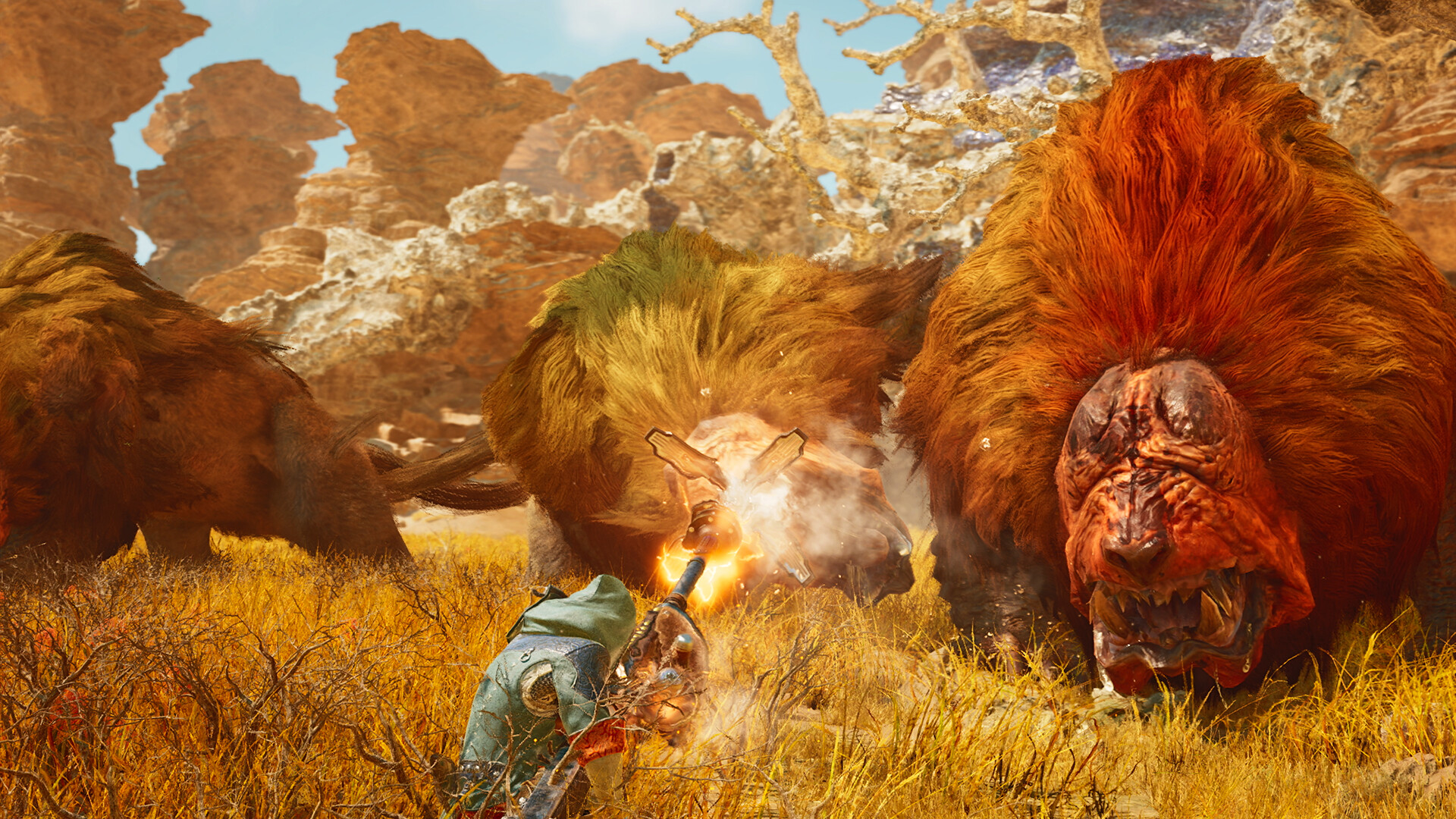
Pro Tip I Wish I Knew Earlier: The “Slinger” isn’t just for grappling hooks. You can fire Brightmoss at a monster’s face to blind it, or Torch Pods to create a fire patch. But the real MVP is Dung Pods. If a second monster shows up and starts ganging up on you (which happens a lot in the higher-rank areas), shoot a Dung Pod at the intruder. It stinks so bad the monster will flee the zone. You can buy Dung Pods from the supply vendor. Carry 10 at all times. Trust me, fighting two monsters at once is the fastest way to get carted.
Advanced Tricks That Turn You into a Monster
Once you’ve got the basics down, you need to start thinking like a hunter, not a fighter. Here’s the stuff that separates a good player from someone who still gets wrecked by the third-tier monster.
- Learn the “Focus Mode” Dance: Focus Mode (toggle with R3) lets you aim your attacks and see weak points highlighted on the monster. This is not a gimmick. It’s mandatory. In Focus Mode, your attacks track the monster slightly, and you can aim upward or downward to hit specific parts. I use this to consistently hit the head of a flying monster or the wings of a charging brute. Practice toggling it on and off until it becomes muscle memory. I rebound my Focus Mode to L2 so I could use it without breaking my grip.
- Wound and Clutch Claw Synergy: When you wound a part (by attacking the same spot repeatedly), it turns red and crackles. If you then use your Clutch Claw (L2 + Circle on the monster) and attack that wounded part, you do massive damage and get a knockdown. The timing is tight—you only have about 5 seconds after the wound opens. I always keep my clutch claw ready when I see a wound pop. This combo is how you stunlock a monster and skip entire phases of a fight.
- Elemental Damage Is King, But Only for the Right Build: In the early game, raw damage is fine. But from the mid-game onward, monsters have elemental weaknesses that double your damage if you match them. For example, the Lavabolt takes 30% more damage from water weapons. I spent hours grinding for a fire weapon against a fire monster and wondered why it was taking so long. Check your hunter’s notes before every major fight—it lists weaknesses. Matching elements isn’t optional; it’s the difference between a 15-minute hunt and a 35-minute slog.
- The Sheathe + Superman Dive Trick: When a monster does a huge AoE attack (like the Duskclaw’s ground explosion), you can’t just dodge. You need to sheathe your weapon (hold R1 + Circle, or just sheath manually) and then sprint away from the monster. As you sprint, if you dodge, you do a Superman dive that makes you invincible for the entire animation. This has saved me more times than any block. Practice it. The timing is actually forgiving—you can dive right before the explosion hits.
- Use Traps Offensively, Not Just for Capture: You can place a Pitfall Trap or Shock Trap mid-combat, and monsters will walk into them if you bait them. This gives you a free 5-second window to wail on a weak point. I always carry one trap and two tranq bombs, even if I’m planning to kill the monster. Traps for damage are underrated. If you time it right, you can trap a monster three times in a fight—that’s 15 seconds of free damage.
One advanced technique I stole from a speedrunner: shoulder-bash with the Greatsword. If you’re using a Greatsword and you’re mid-charge, you can press Circle (on PS5) to do a shoulder tackle that has super armor. It negates knockback from roars and weak hits, and it lets you continue your charge. I’ve used this to tank through a Rathian fireball and land a fully charged slash on her head. It’s risky—you take damage—but the payoff is huge. If you’re comfortable with your health pool, this is the difference between a good Greatsword user and a great one.
I Got My Face Ripped Off So You Don’t Have To
Here’s the exact mistakes I made that got me killed, and I see new players making them every day in multiplayer hunts:
- Overcommitting to the “Big Combo”: You see an opening. You start your longest combo (like the Longsword’s Spirit Blade combo). The monster twitches. You think “I can finish it.” You cannot. The monster recovers faster than you think. I lost three hunts in a row because I tried to land the final hit of my dual blades’ Demon Dance while the monster was getting up. The game rewards patience. Hit once or twice, then roll out. Living to hit again is always better than landing one big hit and carting.
- Ignoring Environmental Hazards: There are vine traps, sprinklers, and boulders in every zone. I ignored them for 30 hours. Now I use them constantly. In the Forest zone, there’s a hanging boulder you can shoot with your Slinger that deals 500 damage (roughly 10% of a monster’s health in Low Rank). I bait the monster under it and fire. Free damage. The game doesn’t highlight these—you have to look for them. Start paying attention to the ceiling and walls.
- Not Using the “Call for Help” Feature: You can fire an S.O.S. Flare at any time during a quest. This opens your hunt to other players. I was too proud to use it for my first 60 hours. Then I got stuck on the Magma Wyrm, which did a fire nova that one-shot me every time. I fired an S.O.S. flare, and three veterans joined, destroyed the monster in 4 minutes, and I got the parts I needed. The community is helpful. Don’t suffer in silence.
- Building Only One Weapon: I mained the Hammer for 100 hours. Then I hit a monster that was immune to blunt damage on its weak spots (the Quartzbeak bird). I had no backup weapon and had to grind for a cutting weapon from scratch. Build at least two weapon types early. I recommend a Blunt weapon (Hammer or Hunting Horn) and a Cutting weapon (Greatsword or Longsword). That way you’re never soft-locked out of a fight.
- Sleeping on the Hunting Horn: Yeah, it’s a meme weapon. But the Hunting Horn in Wilds is actually strong. It hits almost as hard as the Hammer, and it gives your whole team buffs. If you play multiplayer even once, consider learning the Horn. The self-improvement song makes you move faster and negates knockback. I picked it up as a joke and now it’s my third most-used weapon. Don’t knock it till you try it.
Questions You’re Too Proud to Ask
Q: How do I actually capture a monster instead of killing it?
A: You need a Shock Trap or Pitfall Trap and two Tranq Bombs. When the monster is limping (or when the blue skull icon appears on the mini-map), place the trap. The monster will get stuck. Then walk up to its head and throw two Tranq Bombs. Done. You get more rewards for capturing. But you can only capture monsters that can be trapped—Elder Dragons (like the final boss) are immune.
Q: What’s the best weapon for a beginner?
A: The Sword & Shield is the safest. You can block, you’re fast, and you can use items while your weapon is drawn. But don’t let anyone tell you it’s weak. A fully upgraded SnS deals solid damage and has a perfect rush combo that flinches monsters. I started with Greatsword and it was a grind. Switch to SnS if you’re struggling—it’s the game’s training wheels with a combat knife.
Q: Why do I keep getting stunned?
A: Getting hit repeatedly builds up Stun status. It’s a hidden bar. When it fills, you get stunned. The fix is simple: eat Stun Resistance food or get armor with Stun Resistance skill. Also, if you get hit twice in a row, stop attacking and dodge. The stun threshold is lower in Wilds than in World. I got stunned three times in one fight and learned to back off.
Q: Is there a way to fast travel?
A: Yes, you can fast travel between camps from the map. You can also teleport back to base camp from anywhere by calling your Seikret and selecting “Return to Camp.” This doesn’t fail your quest. Do it if you’re out of potions and the monster is still at 60% HP. Better to restock and come back than to fight with no heals.
Q: What’s the point of the “Investigation” system?
A: Investigations are repeatable quests that spawn from tracking monsters. They give bonus rewards, like Rare Materials and Gold Crowns. If you need a specific monster part (like a Duskclaw Claw), check your Investigations board. I farmed the same investigation three times in a row to build a full armor set. It’s way more efficient than doing optional quests.
Q: The game feels laggy in combat. Is it my setup?
A: Probably not. Monster Hunter Wilds has a frame pacing issue on base consoles. Turn off Motion Blur and set your performance mode to Resolution or Balanced if you’re on PS5/Xbox Series X. If you’re on PC, drop shadows to medium—that’s the biggest performance hog. I play on a PS5 and the framerate stutters during the Duskclaw’s nova attack. It’s the game, not you.
Sign in to post a comment.
Sign in with GitHub to join the discussion.
💬 Comments
What players are saying:
Actually useful advice for once. The bit about Dung Pods saved my ass in the desert zone when a Diablos and a Rathian showed up at the same time. I was ready to ragequit. Also, the Focus Mode rebind tip made me double my damage output. Thanks for not being a corporate bot.
Disagree on the SnS being the best beginner weapon. I think the Lance is way safer because you can block literally everything. But the guide is right about traps—I was only using them for captures and now I trap monsters three times a fight for free damage. Solid write-up, even if you slept on the Lance.
The tail-cutting tip changed my whole playstyle. I main Hammer and never bothered with tails, but the guide made me try a Greatsword for the tail. I cut the Duskclaw’s tail off on my first attempt and got the carve material I needed for the armor set. That’s 2 hours of farming saved. Also laughed at the “I got my face ripped off” section because that was literally me yesterday.