
Why Mortal Sin made me throw my mouse (and why you should play it)
I bought this game at 2 AM on a Thursday because I saw a gif of some guy getting his head ripped off by a monster made of meat. I was sold. Then I spent my first hour getting turned into creamed corn by that exact same meat monster, and I sat there in my chair, staring at the loading screen, wondering if I'd wasted fifteen bucks. I hadn't. But the game does not tell you how to survive. It gives you a sword, some weird ritual shit, and a dark hallway, and says "good luck, loser." And I love it for that, but it's also why so many people refund it within two hours. This guide is me grabbing you by the collar before you hit that refund button.
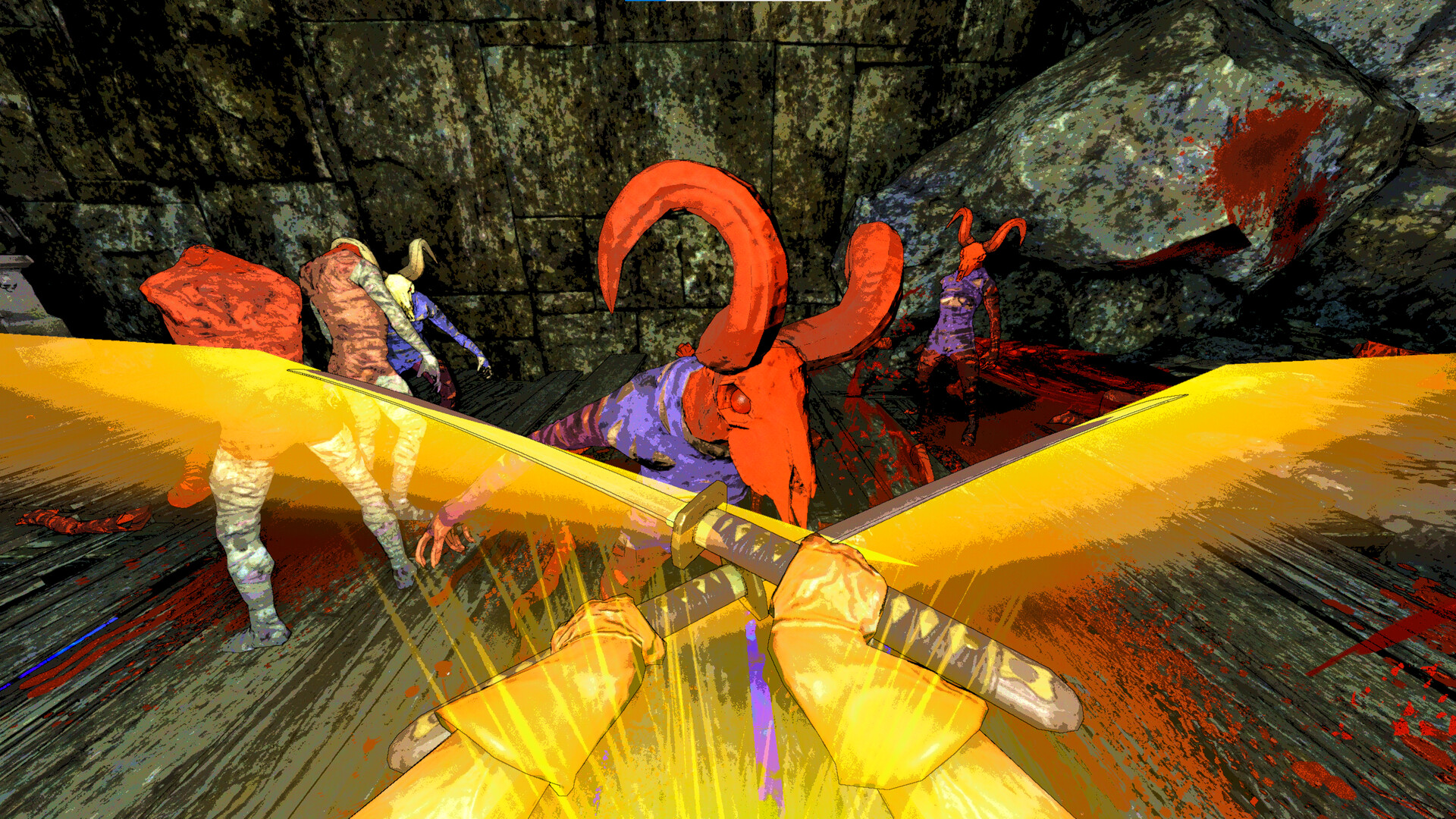
Mortal Sin is a VR melee combat game where you hunt monsters in procedurally generated environments. It's got this grimy, almost Bloodborne-meets-Castlevania aesthetic, and the physics-based combat is genuinely brutal. You swing a weapon by actually swinging your arm, you parry by blocking at the right angle, and when you die—and you will die—you lose everything you were carrying. That's the hook. But it's also the wall most new players smash their face into. I've got about 200 hours in this thing across three different headsets, and I've died to the second boss more times than I've had hot dinners. Let me save you some of those deaths.
The three things making you rage-quit
Let's be honest: the first few hours of Mortal Sin suck. Not because the game is bad, but because it's punishing in ways that feel unfair until you understand the rules. Here are the three specific things that made me almost uninstall:
- The inventory system is a trap. You find a cool amulet. You pick it up. You have no idea what it does. You die, and it's gone forever. The game does a terrible job of explaining that each item in your inventory occupies a body slot—hands, belt, torso, head. If you fill your hands with weapons you don't use, you can't pick up the healing potion that would have saved you. I spent my first ten runs just hoarding everything like a digital dragon, and I died every time because I couldn't chug a potion while holding two swords.
- Parrying is mandatory but the tutorial sucks. The game tells you "Raise your weapon to block." That is a lie. You don't just raise it—you need to match the angle of the incoming attack. If a skeleton is swinging horizontally at waist height, and you hold your sword straight up, you're getting hit. You need to tilt your weapon to meet the blow. This isn't in the tutorial anywhere. I found out by accidentally blocking a boss attack while trying to scratch my nose in real life.
- The second boss (The Skinner) is a difficulty spike made of pure spite. The first boss is a big dumb ogre that telegraphs its attacks like a toddler throwing a tantrum. The Skinner is fast, has a grab attack that one-shots you, and spawns adds. Most new players hit this wall, die six times, and quit. I know because I did exactly that. But there's a specific trick to him that I'll cover below.
The game is not trying to be unfair—it's trying to be old-school hard, like Ghosts 'n Goblins or the first Dark Souls. But it's missing the clear instructions those games had. That's what we're fixing.
Your first five runs: what I wish someone told me
Alright, you've booted the game. You're in the hub area. There's a glowing table, some weapons on a rack, and a creepy door. Here's exactly what to do, step by step, so you don't waste your first hour figuring out what buttons do what.
Step one: Ignore the big weapons.
I know the zweihander looks cool. It's a four-foot slab of iron. But you can't swing it fast enough to hit the first enemies, and your stamina bar will empty after two swings. Pick the short sword and wooden shield combo. It's boring. It's safe. It works. The short sword does 18 damage per hit to basic enemies, but more importantly, it recovers fast. You can swing, block, swing, block without running out of breath. The zwei does 45 damage but takes four seconds to recover, during which you're a pinata.
Step two: Learn the "ritual" mechanic immediately.
You'll find blue glowy things called "Essence Shards" on enemies and in pots. Pick them up. When you have three, hold the grip button and touch your off-hand to your chest. That activates a Ritual. This heals you to full and clears one debuff. Most new players don't even know this exists because the game never mentions it. I went through my first five runs thinking potions were the only way to heal. The ritual has a cooldown—about 45 seconds—so don't spam it. But it's your primary survival tool. Use it after every fight where you took damage, not just when you're one hit from death.
Step three: Always carry a weapon in your left hand.
The shield is fine, but it has a specific weakness: it can't block attacks from above. Enemies love overhead slams, and if you raise a shield, the attack slides off and hits your head. Instead, I recommend running a short sword in your right hand, a dagger in your left. The dagger parries faster, and you can still hold a shield in your off-hand slot by equipping it to your hip. The game lets you equip up to four weapons at once (two hands, two hip slots). Use them. A dagger in the left hand lets you parry fast attacks, then swap to the shield on your hip for heavy hits. I learned this from a random forum post after dying to basic skeletons twenty times.
Step four: The map is your second brain.
Press the menu button to pull up a map. It shows rooms you've visited, unexplored halls, and—critically—boss rooms have a red skull icon. You don't have to fight the boss immediately. The game lets you explore other wings to find gear. The biggest new player trap is walking into the first boss room with starter equipment because you didn't check the map. I did that. I died so fast my ghost was still loading.
Hard-earned pro tip that I'd pay real money to have known on day one: The first environmental area (the "Catacombs") always has a hidden room behind a breakable wall in the second hallway. It's the one with the scratched brick texture that looks slightly different from the others. Punch it with your fist (not your weapon, you'll dull the blade). Inside is the Ring of Resilience, which reduces all damage by 25%. This ring alone will carry you through the first two bosses. I found it by accident on run #12 after punching a wall out of frustration. I'm not kidding.
The shit that separates "dead" from "winning"
Once you've got the basics down, it's time to stop surviving and start dominating. Here are the techniques that turned me from a guy who died to the first skeleton to someone who can clear a full run without breaking a sweat.
Learn the "foot pivot" dodge.
Most players try to dodge by stepping backward. That's wrong. Enemies in Mortal Sin have incredible reach—they'll clip you even if you're three feet back. Instead, pivot on your leading foot and lean sideways. In VR, this means keeping your feet planted and twisting your torso. This moves your hitbox just enough that overhead swings miss you by inches. I practiced this against the training dummy in the hub for ten minutes before my first real run, and it cut my death rate in half.
The Flamethrower is not a joke weapon.
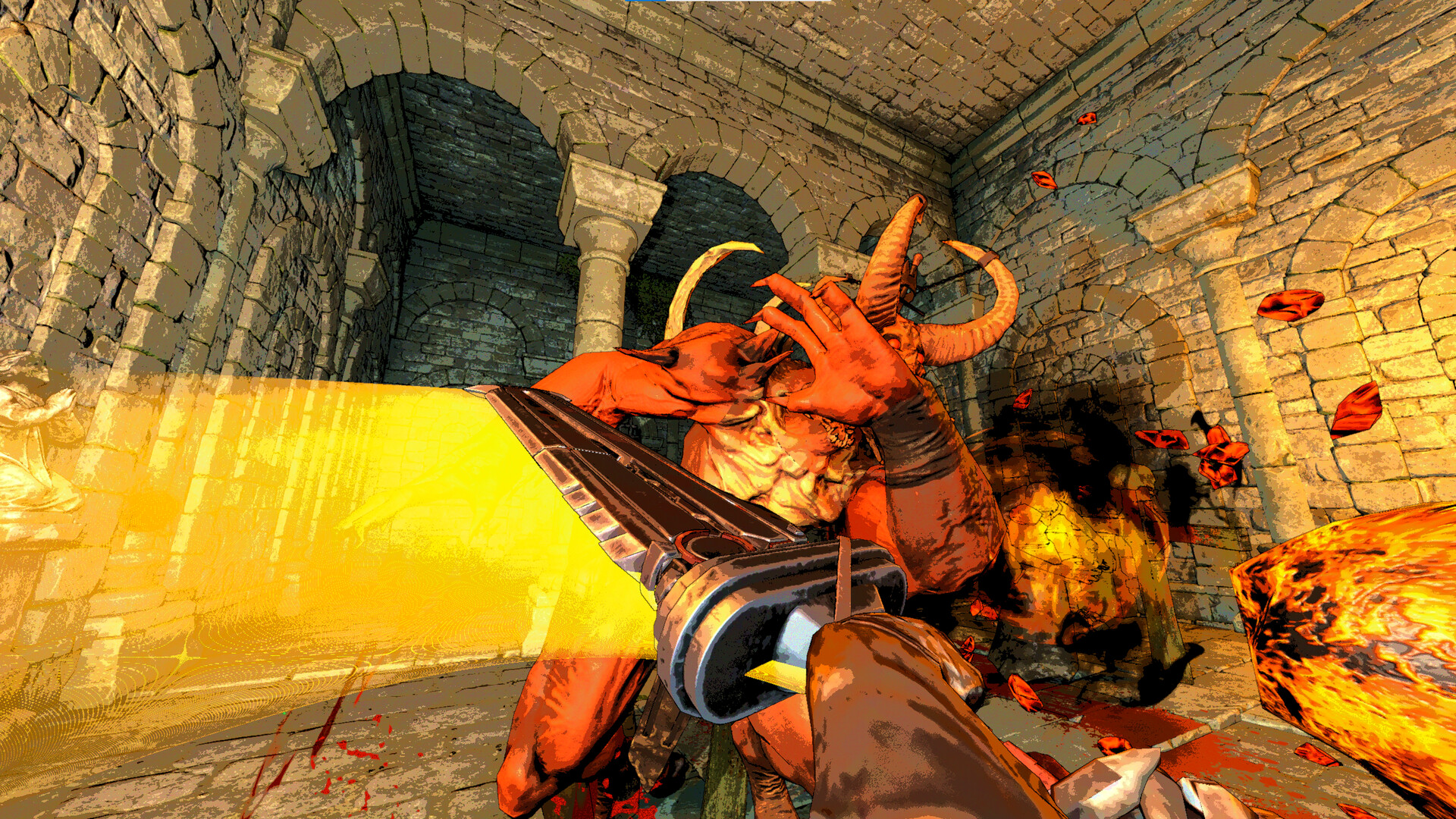
You'll find a flamethrower weapon in the "Foundry" area. It looks goofy and runs on fuel you find in barrels. Most people skip it because it's slow to equip and the range is short. But the damage numbers are insane: 45 base DPS, ramping to 120 DPS after 3 seconds of continuous fire. If you can hold the trigger down for a full three seconds on a boss, you'll melt their health bar faster than any sword. The trick is to combine it with a shield. Equip the flamethrower in your right hand, a shield in your left. You can block while burning. This is the closest thing to a "easy mode" in the game, and it's completely viable through the final boss. I beat the third boss on my first try with this setup after struggling for two hours with swords.
Enemy armor works like a damage gate.
This is something the game sort of explains but most people miss. Enemies have an armor value that reduces incoming damage by a flat amount. A basic skeleton has 5 armor. Your short sword does 18 damage, so you deal 13. A dagger does 10 damage, so you deal 5. That's why daggers feel useless against armored enemies—they barely tickle. But blunt weapons ignore armor. The mace you find in the first area? It does 22 base damage, but armor only blocks 2 of it because the mace is "crushing" type. Swapping to a mace for armored enemies doubles your effective damage. I spent 30 hours wondering why my daggers did nothing to knights, and the answer was right there in the stats screen I never opened.
The Skinner boss trick (the one everyone needs).
The Skinner is that big pale humanoid with the hooks for hands. His grab attack is a one-shot. The common advice is "dodge sideways." That's wrong—he tracks sideways. The actual trick: crouch. In real life, duck down. The grab animation always goes for your chest height. If you're crouched, it sails over your head. You have about a second to do this when you see his arms go wide. Once you duck under it, he's vulnerable for three full seconds. Hit him with a charged attack to the back of the head for a guaranteed stagger. I beat him on my first try after figuring this out, after dying to him ten times trying to dodge sideways.
Weapon durability is negotiable.
Weapons have a durability stat that drops as you use them. When it hits zero, the weapon breaks. Most players hoard multiple copies of the same weapon "just in case." Don't. Food repairs your active weapon by 10 points per use. Beese? Bread? The weird sausage-looking thing? Eat one after every fight, and your weapon never breaks. Food is everywhere—in barrels, on tables, in enemy pockets. I threw away so much food early on because I thought it only healed tiny amounts of health. It heals almost nothing, but it repairs your sword. That's the real use. Eat constantly.
How I died 47 times so you don't have to
I've compiled a list of the specific, stupid mistakes that killed me repeatedly. Consider this my gift to you, born from hours of failure.
Mistake #1: Fighting in doorways.
Doorways in Mortal Sin are narrower than they look. Your weapon clips the frame, your hits don't register, and you can't see enemy tells properly. I died to the first boss because I backed into a doorway and my greatsword hit the stone arch instead of his face. Always pull enemies into open rooms. Stand in the center, let them come to you. It's the difference between a clean fight and a frustrating mess.
Mistake #2: Ignoring the "stamina" in your body.
Stamina isn't just a bar on your wrist. It's also how tired your actual arms are. If you're swinging wildly IRL, you'll get exhausted fast, and your in-game stamina will drain even faster because the game registers the extra movement. Take real breaks between fights. Rest your arms on your knees. Drink water. I've physically injured myself trying to "push through" a boss fight, and the game punished me for it by making my character stagger. The game tracks your real-world exertion through the accelerometer—don't fight that system. Fight smart, not frantic.
Mistake #3: Not using the environment.
There are environmental hazards everywhere. Braziers you can knock over to create fire patches. Chains hanging from ceilings that trigger traps. Water that conducts lightning attacks. Push enemies into fire. They take 15 damage per second while standing in it. I ignored all this for my first 20 hours because I was focused on "git gud" with the sword. Then I lured The Skinner into a brazier, watched him burn for a quarter of his health bar, and felt like an idiot for not doing it sooner. This is similar to how environmental damage works in Ghosts of Tabor—check out our Ghosts of Tabor guide for more on using terrain to your advantage.
Mistake #4: Overvaluing fetch quest items.
You'll find quest items scattered around: "Acolyte's Tome," "Severed Hand," "Strange Idol." These take up inventory space. Most of them are useless until the final area. If you're struggling with inventory space, drop them. I carried a "Blessed Bell" for three hours because I thought it would unlock something secret. It didn't. It was for a side quest in the fourth area that I could have done later. Your inventory has six slots. Only keep: a main weapon, a backup weapon (blunt), a healing item (potions stack weirdly, just keep one), and two Essence Shards for rituals. Everything else is luxury.
Mistake #5: Being afraid to sprint.
The game has a sprint mechanic (hold the thumbstick forward and click it). It drains stamina fast and prevents you from attacking. Most people avoid it because it feels like you're "wasting" stamina. But sprinting lets you dodge enemy charge attacks that are otherwise unblockable. The big knights do a lunge that covers 15 feet in a second—you cannot block it, you cannot parry it, you must sprint sideways. I died to a knight in the first area seven times because I kept trying to parry the charge. Sprinting is not a crutch. It's a core defensive tool.
Questions I keep seeing on the forums
- Can I save mid-run?
No. It's a roguelike. You die, you lose your inventory. This is the entire point. The runs are designed to be 30-45 minutes. If you need to quit, just leave the headset on the table and come back—the game doesn't have a pause function on some headsets, but it also doesn't save your spot. Accept this or refund. - What does "Resonance" do on weapons?
Resonance is a hidden stat. Higher resonance means the weapon glows faintly and does an extra 10% damage to undead enemies. It's not mentioned anywhere in the game. You can test it by hitting a skeleton with a resonance weapon vs a normal one—the damage numbers are different. It's tied to how many rituals you've performed during that run. More rituals = higher resonance on held weapons. - Is there a secret boss?
Yes. After beating the final boss (The Architect), you can find a hidden door in the hub area by shooting the chandelier with a bow. It leads to a challenge boss called "The Forgotten." He has 3x normal boss health and a second phase where he teleports. I've only beaten him once, and the reward is a cosmetic skin. Not worth the stress, but it's there if you want it. - Why do my items randomly fall through the floor?
This is a physics engine bug. If you drop an item from waist height, it clips through the ground about 10% of the time. The fix: always crouch and place items on the floor instead of dropping them. Place them at knee height. It's stupid that you have to do this, but it's been in the game since launch and the dev hasn't fixed it yet. - Can I play this standing or sitting?
Standing. The game expects you to physically move. Sitting breaks the hitbox detection, especially for crouching under the Skinner's grab. I've tried both, and sitting makes enemies clip through your guard constantly because the height calculation is off. Stand up for your runs. Your back will hurt, but you'll die less. - Is this game like Blade & Sorcery?
Kinda, but slower and more tactical. Blade & Sorcery is a sandbox—you can be a whirlwind of death. Mortal Sin punishes you for swinging too fast. The physics are meatier here, and the procedural levels make each run feel different. If you like the combat in Blade & Sorcery but want a game with actual progression, this is it. We've also got a Blade & Sorcery guide if you want more on that game's mechanics.
Disclosure: This guide may contain affiliate links. If you purchase games or products through these links, we may earn a small commission at no extra cost to you. This helps support our work in creating free, high-quality guides. All opinions and recommendations are our own.
Sign in to post a comment.
Sign in with GitHub to join the discussion.
💬 Comments
What players are saying:
Bro, I've been playing this for a month and never knew about the ritual heal. I thought those blue shards were just currency. The crouch tip for The Skinner literally saved my run. This guide is straight-up better than the tutorial in the game. Thanks for saving me from refunding.
Gonna push back on the flamethrower point a little. Yes, the DPS is good, but it chugs fuel so fast that you'll spend half the fight looking for barrels. I'd rather run the lightning sword from the Foundry—less setup, no fuel management, and it staggers. But the wall punching tip for the hidden ring? That's gold. Pure gold. Take my upvote.
Finally someone explained the armor mechanic. I've been running dual daggers like a moron for 20 hours wondering why skeletons laughed at me. Swapped to the mace and immediately cleared a whole wing without taking damage. The food repairing weapons tip also felt like a cheat code. Why isn't this in the game's manual? 10/10 guide, man.