
First Things First
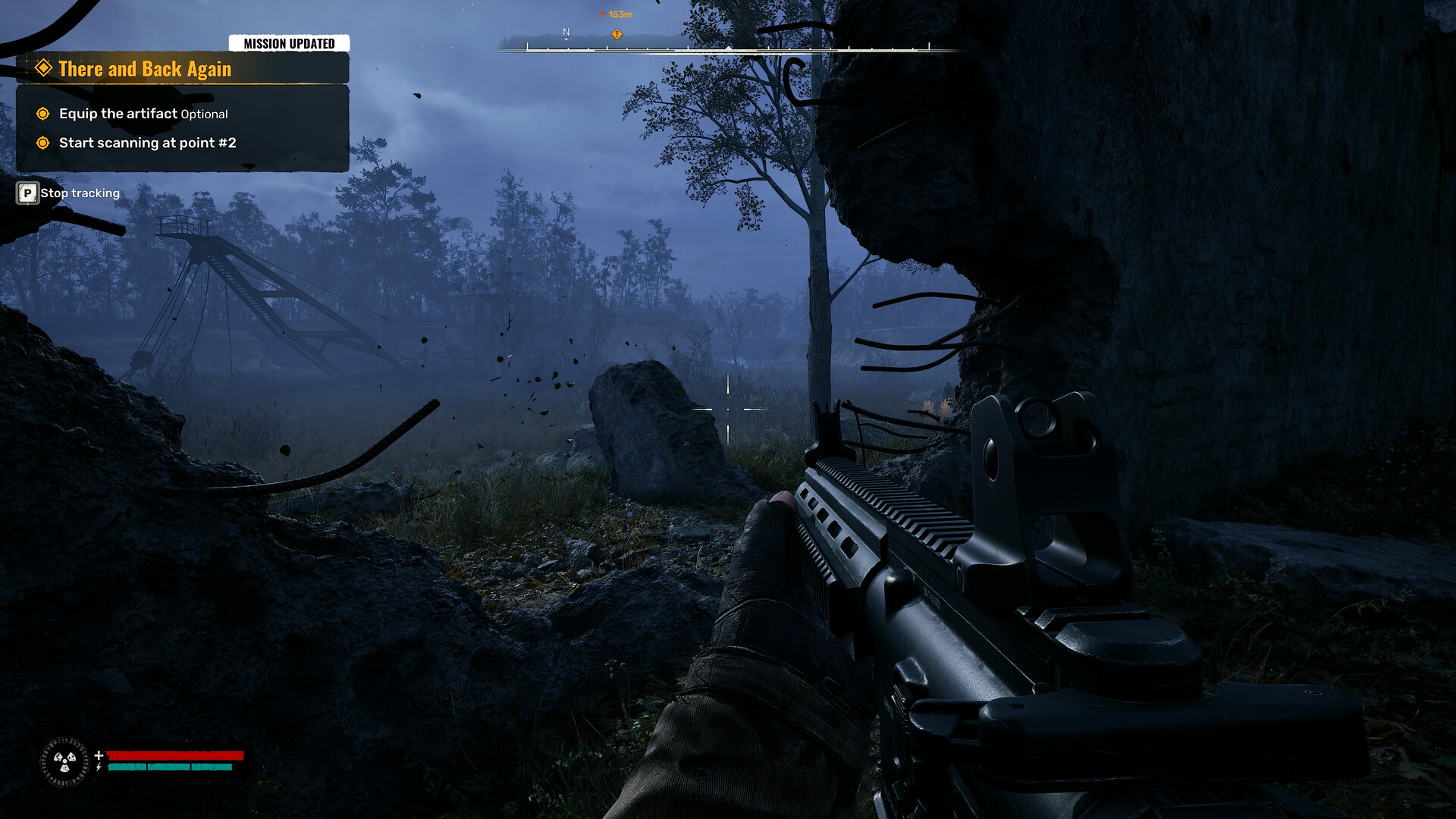
I'm gonna be straight with you: Stalker 2 wrecked me for the first ten hours. I mean absolutely wrecked me. I came in hot, thinking my years of Metro and Far Cry would carry me. They did not. I bled out in a ditch outside the Lesser Zone three times before I even found the first main quest marker. My first artifact sent me into a radiation coma. A pack of flesh killed me while I was staring at the PDA map. This game does not care that you've played other shooters. It wants you to learn its language, or die trying.
But here's the thing: once you start speaking that language, Stalker 2 becomes one of the most rewarding survival shooters I've ever touched. The atmosphere is oppressive, the world feels alive in a way that's rare, and the risk-reward loop of pushing deeper into the Zone for better loot is addictive as hell. This guide isn't a checklist. It's me telling you what I wish someone had told me before I wasted four hours hauling broken AKs back to base.
The Pain Points
Let's talk about why you're probably alt-tabbing right now, searching for answers. The game has some real gut-punch mechanics that new players bounce off hard.
- Ammo starvation: You will run out of ammo. Not "oh no, I'm low." I mean zero bullets, staring at a bloodsucker, holding a broken knife. The game's economy is tight, and enemies are spongey. You cannot mag-dump everything you see.
- Gear durability is a tax: Repair costs are brutal. I spent my first playthrough broke because I kept repairing every weapon I picked up. That's a trap. Your starting suit will cost more to fix than it's worth by hour three.
- Anomalies are not optional: They're everywhere, and the game's tutorial for them is basically "good luck." You will walk into a gravitational anomaly and lose all your loot. I've done it more times than I can count.
- The map is not your friend: The minimap is tiny, the main map doesn't show elevation, and quest markers sometimes just point at a general area. You will get lost. Navigating the Zone is a skill you have to learn.
- Enemy AI is either blind or omniscient: Sometimes I'm sneaking through a building and a bandit sees me through two walls. Other times I walk right past a sleeping boar. The inconsistency is maddening.
I'm not saying this to scare you off. I'm saying this because the game is designed this way on purpose. Once you understand that Stalker 2 is really a resource management sim with guns, the frustration turns into strategy. You stop trying to win every fight and start deciding which fights are worth the bullets.
What You Actually Need To Know On Day One
Forget the main quest for a bit. Here's your first real checklist.
Your first hour: Don't run toward the quest marker. Seriously. Stop at the first camp you see, sell the junk you find, and buy a basic detector from the trader. That Echo Detector costs almost nothing and it's how you'll make your first real money. Artifacts are the currency of the Zone — they sell for good cash, and you'll find them in anomaly fields. The first one you dig up might be a worthless "Flash" artifact that gives you radiation, but it teaches you how the system works.
Bind your keys right now: Go into settings and bind a hotkey for the bolt. I use middle mouse. The bolt is your best friend. You throw it into anomalies to trigger them safely — if it gets crushed or burned, you know that spot is death. Also bind the flashlight to something easy. You'll be in the dark a lot.
Storage is sacred: Find the first friendly hub and dump everything you're not using into the stash box. Your carry weight is tiny. Anything over 50kg slows you down, and over 60kg turns you into a crawl. I had to abandon a whole stash of loot because a mutant pushed me off a ledge and I couldn't climb back up. Weight management will make or break your run.
Repair logic early: Don't repair anything that's yellow or red in durability unless it's your primary weapon. Sell broken guns to traders. They give less money, but it's still cash. In early game, you're better off cycling through fresh guns you find on dead bodies than paying 3,000 coupons to fix a rusty AK. This mechanic is similar to the resource loop in Hades — you have to know when to let go of gear to keep moving.
Eat and drink: Your hunger and thirst meters deplete faster than you expect. Always carry 3-4 cans of food and 2 bottles of water. You can find food in stashes and on bodies. If you push a long mission without supplies, you'll start taking damage from hunger. That's how I died at the garbage dump — no health, no food, surrounded by dogs.
Saving is a religion: Quicksave often. I mean every time you clear a room, cross a bridge, or even sneeze. The game has bugs — random crashes, physics glitches, enemies spawning behind you. I lost forty minutes of progress because a box flew into a fan and killed me. F5 is your god. Praise F5.
Expert Tricks The Game Never Tells You
Alright, you've survived the first few hours. Now let's get into the stuff that separates a functional stalker from a rich one.
Pro tip — Fire rate is a lie: Every weapon in Stalker 2 has a hidden "accuracy recovery" stat. If you spam the trigger, your shots spread like a hose. But if you pace your shots — fire once, wait a half-second, fire again — the first shot stays dead accurate. This is how you kill headshot-reliant enemies at medium range. I tested this with the Viper 5 (an early SMG). Full auto at 10 meters misses most of the magazine. Tapping the trigger at the same speed? Three headshots, target dead. Change your fire behavior.
- Detector upgrade priority: Buy the Bear Detector as soon as you can afford it (around 5,000 coupons). The Echo works, but the Bear gives you a directional arrow for artifacts. It turns artifact hunting from blind guessing into a roguelike mini-game. I made my first 20,000 coupons in two hours with the Bear.
- Night vision is bait: The first night vision upgrade you can buy looks cool but it drains your batteries super fast and has terrible range. The flashlight is actually better in most situations because it doesn't blind you to close threats. Save the NVGs for late-game missions where you're fighting human enemies at long range in total darkness.
- Bloodsuckers have a pattern: Everyone hates these invisible jerks. Here's the trick: they always attack three times in a row with a pause between each. Sprint sideways on the first attack, then immediately turn 90 degrees. They reappear behind where you were. I've cheesed like twenty bloodsuckers with this side-step pattern. A shotgun is your best bet — the SPAS-12 will two-shot them at close range if you land both pellets.
- Sell food, keep water: Traders buy food for decent money. Water, not so much. Water weighs more than it's worth to sell. Just keep enough for your own hydration dump the rest. I carry three waters tops.
- Armor piercing vs. hollow point: This isn't a simple "AP is better" situation. AP rounds do less damage to unarmored targets but shred armor. Hollow points are the opposite. Standard bandits die faster to hollow points. Monolith soldiers in armor? You want AP. Check the enemy's look — if they're wearing a helmet and vest, load AP. If they're in a leather jacket, hollow points will drop them in half the shots.
- Weapon degradation is per-shot, not per-kill: A weapon that fires faster degrades faster. The Vector chews through durability like a hungry dog. A slower weapon like the SCAR-H lasts way longer per fight. Factor this into your loadout. A high fire rate weapon will cost you more in repairs.
I'll also say this: don't sleep on the handguns. In early game, a silenced pistol is one of the most valuable tools you have. You can clear an entire camp of bandits with headshots from a USP Compact if you're patient, and you won't alert the whole map. The pistol's ammo is also lighter and cheaper than rifle rounds. I spent most of the first zone as a pistol main, and my bank account thanked me.
Common Mistakes to Avoid
These are the mistakes I made, repeatedly, until I wanted to throw my keyboard through the window. Learn from my stupidity.
- Repairing everything: I already said it, but I need to say it again because I didn't listen the first time. If a gun is below 60% durability, sell it to the trader and buy a fresh one. Repairing a junk gun costs more than the gun is worth. The only exceptions are unique named weapons and your main combat gear.
- Not using bolts in combat: Bolts aren't just for artifact fields. Throw a bolt to distract human enemies. The sound of a bolt hitting a metal pipe makes them turn around. I've used this to flank entire squads. I also use bolts to trigger anomalies mid-combat — you can lure a stalker into a grav anomaly by throwing a bolt past them. They'll path into it.
- Holding a grenade too long: The cook time on grenades is short. I cooked one for three seconds, threw it, and watched it bounce off a window frame and land at my feet. You do not need to cook grenades in this game. Just toss and let the fuse do the work. The blast radius is bigger than you think, so don't try to be fancy.
- Ignoring side quests: The main story gives you reputation and gear, but side quests from the Rookie Village and Garbage bases give you money, blueprints for upgrades, and unlock better traders. I skipped the side quests to rush the main plot and ended up undergeared for the Red Forest section. Don't be me. Do the side content.
- Walking into anomaly fields blind: I cannot count how many times I stepped into a "safe" looking field and got crushed by a vortex. Use your detector in areas with visual distortion. If you see shimmer or floating debris, stop. Throw a bolt. Wait. Watch where the anomaly triggers. The game punishes impatience in these zones.
- Overencumbering yourself for a "big score": Carrying 75kg of loot back to base sounds good until a pack of dogs catches you and you can't sprint. The extra weight slows your stamina regen, which means you can't dodge or climb. I lost 12,000 coupons worth of artifacts because I refused to drop a single AK. Drop the weight. Take the safe route.
- Not upgrading your suit first: Your suit's anomaly protection is more important than weapon damage in early game. I spent all my money on a fancy scope and then died to a chemical anomaly because my suit had 0% chemical resistance. Upgrade your suit's anomaly resist lines first. You'll survive the field, which means you'll actually get to use that scope.
FAQs From Desperate Stalkers
Q: How do I make money early without fighting?
A: Artifact hunting is the safest income. Get the Bear Detector, go to anomaly fields in the Lesser Zone, and sell everything except the dangerous artifacts (the ones that give radiation). Also check every stash on your map. Stashes respawn slowly, but they often have ammo, food, and valuable junk you can sell. One run through three fields can net you 8,000 coupons.
Q: What's the best first weapon upgrade?
A: Suppressor on any rifle you plan to use for the first 20 hours. Silenced shots let you clear camps without triggering reinforcements. Second upgrade: extended magazine. Reloading mid-fight in this game is lethal. I put a 45-round mag on my AK and my survival rate doubled.
Q: Why do I keep bleeding from random falls?
A: The fall damage threshold is low. Anything above a 2-meter drop can cause bleeding. The game considers a stumble off a curb as "falling." Always carry bandages (at least 5) and medkits (at least 3). Bleeding stacks — if you take two hits, you'll bleed out in seconds without bandaging. I always drag a body to loot their meds before I leave a fight.
Q: The artifact gave me radiation, what now?
A: Some artifacts have a side effect of emitting radiation while you carry them. You need lead-lined containers to hold those safely. You can find these containers in stashes or buy them from traders with high reputation. Until then, only pick up artifacts that don't have the radiation symbol. If you pick one up accidentally, drop it fast — your Geiger counter will spike.
Q: Can I respec my skills or upgrades?
A: No. Once you spend coupons on a weapon upgrade, it's permanent. There's no respec system. That's why I tell people to think before they buy. Don't upgrade a weapon you'll replace in two hours. Put your early resources into the suit and general survival gear. You can't undo bad upgrade choices, so choose carefully. This one-way design reminds me of the upgrade system in Kingdom Come: Deliverance — commit hard to your gear.
Q: How do I deal with the constant crashes?
A: It's not you, it's the game. Stalker 2 is beautiful but janky on launch. Turn down shadows and ambient occlusion to medium. Those two settings seem to trigger memory leaks. Also, limit your FPS to 60 in the settings. The engine doesn't handle high frame rate well — it can cause physics glitches. Quicksave is your safety net. I've had the game crash right after a cutscene, losing 30 minutes. Quicksave before every conversation with a named NPC.
Sign in to post a comment.
Sign in with GitHub to join the discussion.
💬 Comments
What players are saying:
Dude, the tip about pacing your shots with the Viper 5 completely changed how I play. I was dumping entire mags into bandits and missing half. Now I tap-fire and drop them clean. That hidden accuracy stat is real. Also, the bolt distraction trick? Used it last night to sneak past a chimera. This guide saved my run.
Hard disagree on night vision being bait. I found a late-game headset that has NVG that actually works well with the battery upgrade. But for early-mid game? Yeah, you're right, flashlight is better. I just wish you'd mentioned the lead-lined container spawns in the train yard stash — that would have saved me ten minutes of searching.
I've been telling all my friends about the bloodsucker side-step pattern and they think I'm crazy. I showed them the video of me doing it and they shut up. Solid tip. Also, the section about never repairing yellow guns? I was wasting so much money. Now I'm rolling in coupons. Thanks for writing this like a human and not a bot.